

OFFSHORE BANKING
GUIDE 2022
How to open offshore accounts, what to look out for & the best offshore banks
In this detailed report you will learn all relevant information about offshore banking and how to open offshore bank accounts.
Offshore financial centers (OFC) originally, they were often located in former British colonies, often beyond the coastal region, i.e. in international waters.
Today, the term offshore has changed somewhat. Encyclopedias often refer to them as financial centers located outside "customary legal norms."
This term suggests that offshore banking is something illegal, but it is not. It is probably better to use the term "outside domestic legal norms."
It is true that OFC are often characterized by high confidentiality, low taxes and comparatively restrained market regulation.
However, OFC & accounts there are not suitable for criminal business. The OECD has launched various programs to prevent money laundering and tax evasion.
Financial stability is another area where there is global collaboration. More and more countries are joining the automatic exchange of information (CRS). These include the most well-known offshore banking financial centers such as Panama, Singapore & Hong Kong.
Other countries will follow in the coming years, so offshore accounts or foreign accounts are not suitable for tax evasion. They have their justification for quite legal reasons. Below you will find reasons why everyone should have an account abroad.
You will get information about the different types of accounts. You will also learn where it is worth opening an account and how to open an offshore account. Please use the table of contents to get an overview and to jump between the chapters.
Why you should open an offshore account
In general, it makes sense to diversify assets. It is recommended to allocate assets. For example, part can be invested in precious metals. Another part of the assets can be invested in real estate or company shares.
Ideally, you should not only take care to distribute your assets across different asset classes and sectors. It also makes sense to spread your investments across different regional markets.
The financial crisis in Greece showed how quickly assets believed to be safe are threatened. At that time, a country that had previously been regarded as a model student when it came to the Maastricht criteria also began to falter: Cyprus.
Unfortunately, many Cypriot banks had close ties with Greek financial institutions. Thus, the Cypriot financial system also began to falter. To make matters worse, Cyprus was considered a tax haven. The banks on the island also allegedly helped Russian oligarchs launder money.
No one provided any real evidence, but EU member Cyprus was not rescued. The banks simply went bust and investors' money was lost or used for bail-ins. Cyprus slid into recession through no fault of its own.
Can this happen again?
Yes, because the crisis was triggered by huge government debts at the time. The economic system of the Western world is built on debt. States or central banks are printing massive amounts of money without there being any real equivalent behind the amounts of money.
Banks play an important role in this monopoly. Deposits of customers are used by banks to speculate on the capital market or to grant loans. Banks conduct all these transactions almost exclusively with customers' money. And when you deposit your money in a bank, you give it a loan, you become a creditor.
The capital ratio in the EU must be just eight percent. The equity ratio in the EU must be just eight percent. In the US, the Trump administration is in the process of further easing capital requirements. It is likely that such considerations will also be made in the Euro Zone.
This could, for example, enable investments after the Corona crisis. The euro crisis has shown something else: crises are not necessarily global, because the impact on financial markets outside Europe has been small. So the first reason is:
Reduce political risks through geographic diversification
The Euro crisis was an ideal example of how geographic diversification can cushion the risk of regional crises, and in some cases even make you look like a winner.
It is currently impossible to predict how the Corona crisis will turn out. The countries in Europe, but also the USA and other countries are getting into debt at an unprecedented rate.
Even strong countries such as Germany and the USA are reaching their Limits. By contrast, some countries in Asia are coming through the crisis comparatively well. This shows that crises rarely affect all regions equally.
A foreign account is an effective asset protection that secures liquidity even in a crisis.
Gain more freedom by legally minimising the reach of your home government on your belongings
Authorities have far-reaching powers in Germany. If there are discrepancies in the course of a tax audit, tax offices can block accounts. It can take a long time for the account to be released. If no agreement is reached with the tax office, there is a risk of a protracted legal dispute.
For this time, the account remains blocked. The result is insolvency. Small entrepreneurs and freelancers are not only threatened with the end of their business, but possibly with personal bankruptcy.
Account abroad helps to maintain liquidity. In theory, the tax office can seize accounts abroad, but this is not so easy. So we can state: An account abroad is more secure!
This creates a conflict of interest, the consequences of which you can mitigate by opening a foreign account.
Note: This is not about evading taxes. If the authorities block the account in your country, and then their decision turns out to be unreasonable. You will already be damaged. It's important to protect yourself from this.
Asset & Expropriation protection
We have already discussed Cyprus. There, investors' assets were simply expropriated by the lawnmower method in order to save the ailing banking system and the state.
In Poland in 2013, half of all retirement money had to be invested in a sovereign wealth fund.
The low interest rate policy of the ECB (European Central Bank) is hitting many banks hard. As early as 2016, the EU decided that it is not the taxpayer's job to save banks.³
This is interesting because the ECB's low interest rate policy is primarily aimed at restructuring government budgets. If banks falter as a result of this policy, bank customers are first asked to pay (bail-in).
The costs of the corona crisis are initially paid for by debts, but these liabilities must also be paid. It doesn't take much imagination to guess who will end up paying the debts.
An offshore account with a solvent bank abroad can protect you from such scenarios or prevent a total failure.
Privacy & Anonymity protection
Can I open an anonymous bank account abroad?
Those who transfer money in U.S. dollars should know that these transactions do not take place without monitoring by the United States. The Eurozone has also taken measures that are officially intended to combat money laundering and terrorist financing.
In reality, however, they affect all foreign transfers above a certain amount. In Germany, this applies from 12,500 euros, according to the foreign trade and payments Act. If a transfer is above this amount, it must be reported.
This also applies if the payment is made as part of a completely legal transaction. In other countries, this state distrust is not common. An account with an offshore bank or abroad helps against excessive state curiosity.
For example, if you want to buy land or real estate in Asia, it might be easier. In Germany, the bank must report to the Authorities if you make larger transactions.
On the other hand, the state is also interested in transactions from which you make a profit. You are being watched closely enough, even if all your actions are in accordance with the law.
But even quite banal things like your daily shopping leave their traces and are quite interesting for the state and other companies in the country.
If all transactions are made via an offshore account, it will be very difficult to get hold of your data. In a sense, you control what data the government receives about you. However, complete anonymity with an account abroad is no longer possible today.
Reduce currency risks with multi-currency accounts
One variant to cover crises is the expansion of the money supply. This means nothing more than the creation of additional money, for which, however, no new substantial values are available.
This is how more and more money is created, but for which there are not always more goods. The result is inflation, which has an impact on the value of a currency. The best example is the decline in the value of the euro against the U.S. dollar since the euro crisis broke out. If one Euro still cost $1.50 in 2010, today it is only $1.00 (September 2022).
If you now think that there is no inflation, then you have overlooked the price development in the stock and real estate market. The ECB's monetary policy is causing inflation unprecedented since the Great Depression in the 1920s.
This inflation is slowly becoming visible on the housing market as a major social problem. This can end up being a political risk (see above), which is reduced by opening an offshore account.
A sure protection against inflation is to invest in precious metals. Currency fluctuations can be balanced with multi-currency accounts by holding different currencies.
2 safe foreign currencies:
- Norwegian krone
- Singapore Dollar
Optimize interest rates
If you store your money in a European bank, you don't get any Interest, sometimes there is even negative interest. Taking inflation into account, there has been a not inconsiderable loss in value for deposits for years.
Although Interest rates have fallen everywhere in recent years, some countries still offer attractive interest rates. Good conditions are not only available in completely over-indebted countries.
One of these solid countries is Georgia, where the policy interest rate was 8 percent in September 2020.⁴ The Public Debt in June 2020 was 46.6 percent of GDP. For comparison: Germany was 67.4 percent.
Low interest rates can also be advantageous, for example if they ensure favorable conditions for Loans. For example, high-yield securities can serve as collateral for low-interest lombard loans.
Tax optimization
If you already live abroad, it may make sense to use an offshore account for tax optimization.
Let's say you live in a country that does not tax foreign income unless it is transferred domestically. This is often the case in countries with Non-Dom tax systems and built-in remittance-base clauses, or in modified forms like Thailand.
It then makes sense to have the foreign income flow into an offshore account to legally avoid taxation. In contrast to tax evasion, tax optimization is legal. It is explicitly allowed to use the laws to one's advantage.
Offshore accounts are not suitable for that
Tax evasion or money laundering are not possible with offshore accounts. The idea of a secure numbered account no longer exists. Switzerland's banking secrecy, which used to be almost insurmountable, has also been softened.
Almost all countries in the world participate in the automatic exchange of information. Countries that do not yet participate will join the OECD program in the coming years.
These include, for example, Georgia and Thailand, which want to implement the guidelines in 2023. Anonymity no longer exists in finance today. This also applies to an account with an offshore bank.
International transactions are in most cases traceable for authorities. This is especially true when you transfer money from an EU country to your offshore account. An account abroad is not suitable for hiding money.
Are offshore accounts legal?
Opening an offshore account is legal. Generally, it is up to you what you do with your money after taxes.
You may have to consider reporting requirements in your country. In Germany, the ownership of an offshore account is not subject to reporting requirements. However, according to the foreign trade and payments ordinance⁵, you must provide comprehensive information about your foreign assets.
In general, you should not forget to file the necessary tax returns (for example, for interest income received). The tax office will find out sooner or later anyway. Avoid the trouble caused by undeclared income.
The tax authorities don't believe the excuse that you "forgot" your account abroad. In this case, you must expect severe sanctions. Some offshore banks know the obligations of their foreign customers and support them in the implementation.
In general, however, you are responsible for your own tax returns and reporting obligations. So do not operate your offshore banking in secret or without being clear about all obligations beforehand.
What happens when a bank goes bankrupt?
In the European Union, it is regulated by law that 100,000 euros are insured on the account via deposit protection. If your bank goes bankrupt, you get paid out 100,000 euros, with joint accounts it is 200,000 euros.
Apart from the amounts guaranteed by law, it is up to the EU countries to organize deposit Insurance. The situation in Germany is confusing because there are several security funds.
Private Banks, for example, pay into the compensation scheme of German Banks (EdB). However, there are exceptions, such as Consorsbank, which as a branch of BNP Paribas is a member of the French protection fund.
Anyone who struggles through the EdB FAQs will recognize that a systemic bank collapse is not covered by this institution.⁶
The assets are to increase to 0.8% of covered deposits at member banks by 2024. It is rather unlikely that this reserve will be able to compensate for a banking crisis.What happens then is not regulated.
The EdB only refers to the fact that the amount of compensation will be paid out. It is not clear from the explanations where the money will come from in the event of a shortfall.
To make things even more confusing, public banks have their own deposit insurance. It is called the compensation scheme of the Federal association of Public Banks in Germany (EdÖ).
In the end, will any bank customer see through this similarity in name to the EdB?
Perhaps there is a system to this confusion. It probably does, because anyone who believes that savings banks, state banks or cooperative banks are public banks is mistaken. These banks rely on an institutional solution.
The banks step in to help each other if one institution gets into trouble. The aim is that no bank becomes Insolvent.
Now imagine the following scenario: The savings bank model is based on customers investing their money with the savings bank, which then lends the money out at a higher interest rate.
Due to the low interest rate policy of the ECB, the return on savings banks has fallen dramatically. It is not really reassuring to think that ailing banks should also rescue ailing ones.
Financial experts are therefore warning that the security systems in Germany will not be sufficient if the banking system collapses. They suspect that the banks assume that the state will step in if there is insufficient cover.
But does it really do so? It is not certain.
To this day there are financial experts who criticize the promise made by the federal government after the Lehman Bankruptcy in 2008. At that time, the federal government did not have to step in.
Doubts persist that then Finance Minister Peer Steinbrück and Angela Merkel could have kept their promise.⁷ The Lehman bankruptcy led to a severe banking crisis in 2008.
At the time, the German government probably prevented a bank run with its statements. Such a rush with customers clearing their accounts is dangerous. No bank has sufficient liquid funds for this case. The banks would have to go bankrupt.
But what happens if the deposit insurance does not have enough capital for compensation?
According to EU law, this should be fairly simple: the state must assume liability. That means the taxpayer pays. Such an action is likely to cost a lot of money that the State would have to collect elsewhere.
In the past, states have not been very squeamish when it comes to citizens' savings. Italy, Spain and Portugal, which were badly hit by the Euro crisis, taxed the supposedly safe savings deposits in order to restructure their budgets.
The current Corona crisis is again costing the states a lot of money. Governments are currently busy trying to prevent the collapse of the economy.
The trillions of Euros and Dollars borrowed for this purpose will have to be Recouped at some point. And if a state can no longer be held liable, then the bank's depositors will be held accountable. This is then called a bail-in.
The uncertainty in the corona crisis means that people prefer to save their money rather than spend it.
According to DZ Bank, the savings rate in Germany rose by 16 percent in 2020.⁹ In the previous year it was only 10.9 percent. According to the Bundesbank, most Germans save in the form of cash or bank deposits.
This means that there is a lot to get from the Banks and a Bail-in solution is easy to implement. The low velocity of circulation also ensures that we are not yet seeing very strong Inflation.
However, this also applies to the state, which at least has access to bank deposits. When it comes to cash, many governments have already taken precautions and prohibit cash payments above a certain amount. All of this is "of course" just to fight money Laundering and Terrorism.
Well, who believes it...
All of this shows how vulnerable the financial system is and how Important it is to diversify your liquid assets as well.
Of course, a bank can also go bankrupt abroad. That's why it's crucial to spread your money well. Below are tips on how to recognize a safe bank.
Asset protection through offshore banking
Offshore Banking only makes sense if you prevent the government from accessing your money.
Opening an account with a bank in another EU country is not a good idea. Since 2017, it has been quite easy for authorities within the EU to block or seize accounts in other EU countries.
Tax offices do not even need a court order to do this. Authorities are always able to make decisions against you without due process. An administrative decision is legally valid even if no neutral judge is involved in the proceedings.
Your interests play no role in these decisions. One can certainly speak of an act of arbitrariness.
Different situation in Switzerland and Great Britain. In principle, account seizures are also possible there, but the authorities usually shy away from the associated effort.
When looking for the right location and the right offshore bank, you should be guided by the following considerations:
A country with a high public deficit will sooner or later have to take action. This may also include taxes or access to bank deposits.
If many people run to the banks to withdraw all their deposits, the financial system can quickly fail. What applies in Europe also applies when choosing the location of your offshore account.
What is an offshore bank?
Offshore means far from the coast and originally referred to banks that were often based in British colonies. They are often associated with facilitating tax evasion, money laundering and corruption.
They were subject to little regulation, but had strong banking secrecy. Such banks hardly exist today. Thanks to the automatic exchange of information CRS, there is no longer any banking secrecy in tax nmatters.
The regulation of banks has become much stricter. Banks are asking exactly where their customers' money comes from and how they earn their Income (AML & KYC).
Today, an offshore bank is essentially a bank abroad. This also includes banks, which do not have to cross an ocean. The offshore money houses also include banks in Switzerland or Georgia.
How do you know if the bank is safe?

Anyone who believes that regulation in the EU or the USA means a guarantee for the safety of deposits has been proven wrong in recent years.
It was not only Lehman or a few Greek banks that got into difficulties in the past. Not everything went well in the domain of the German financial regulator BaFin either. Commerzbank failed to take over Dresdner Bank in the middle of the financial crisis and had to be rescued by the state.
It is safer to take a close look at the banks' business figures yourself.
It is true that a large bank is not necessarily the safest. Before its bankruptcy, Lehman Brothers was one of the Largest Investment Banks in the United States. In 2007, the bank bought Archstone-Smith, a large condominium owner, for $22 billion.
When the housing bubble burst a year later, the bank ran into trouble. Even two capital increases of almost 10 billion dollars failed to eliminate them and led to Insolvency. The total loss is said to have been more than 200 billion dollars.
Incidentally, according to the financial times, the bank had stashed enough uranium to build a nuclear bomb. Shortly before the bankruptcy, the bank had acquired a license to trade in uranium.¹¹
In the EU and the U.S., most banks have very low capital ratios. Regulatory requirements were increased after the 2008 financial crisis.
In the wake of the slowdown in economic growth, which was already evident before the Corona crisis, there were moves, particularly in the U.S. treasury department, to relax regulation.
Lehman is unfortunately not an isolated case; Investment Banking involves high-risk financial speculation. In addition, major banks are often targeted by investigators. In addition to money laundering allegations, there are always manipulations.
The Swiss UBS was Involved in the Libor scandal in 2014, along with other major banks.¹² This involved manipulation in foreign exchange trading.
In addition, globally active banks are easier to blackmail. Banks in particular that want to be active in the USA have to make numerous concessions to the authorities there. If they are uncooperative, the US imposes severe penalties or revokes the license.
It is therefore advantageous if the bank is not based in the country in which you live. It is not only in the USA that banks are exposed to the arbitrariness of the authorities. If you live in Germany and your bank has a registered office in Germany, the authorities can easily obtain information about your assets.
Private banks that focus specifically on private banking are safer for your assets.
Such banks usually also have a significantly higher equity ratio. In some cases, they have an equity ratio of over 20 percent, which is significantly higher than the eight percent required by the EU. This makes banks more crisis-proof, which promises optimum protection for your assets.
Small private banks with high capitalization that are based in a legally secure country are ideal. Legally secure means that the economic environment and the political situation in the country do not pose a risk. There should also be efficient regulation.
What happens to customer funds if the bank becomes insolvent is also important. There are crucial differences here. According to the prevailing laws, client assets may become part of the general bankruptcy estate, or they may be treated in a privileged manner. This is the practice in Switzerland.
Banks regularly publish balance sheets that provide a glimpse of business success. You can also recognize the risk to your assets by the transactions a financial institution carries out.
Leverage investments are very profitable when successful. However, if the deal goes wrong, the bank's existence will be in question. This also applies to derivatives trading or if the bank has many non-performing loans in its portfolio.
In addition to the equity ratio, liquidity is an important indicator. Is it sufficient if the bank is faced with unexpected liabilities?
These questions are not always easy to answer for an outsider. That's why you should Contact Us. Our experts will advise you and show you which bank suits you best.
Equity ratio of the bank
should be above 10%!
Short-term liquidity of the bank
should be over 10%!
NPL (non-performing loans)
should be below 2%!
What is an offshore account?
An Offshore Bank account is nothing more than an account at a foreign bank and therefore an account abroad. It is used to internationalize your assets.
The account works similar to the one in your home country. You can usually apply for debit cards or sometimes credit cards, make transactions or simply safe money.
Of course, a good offshore account includes access to online banking. Offshore accounts can give you easier access to the international financial markets with additional currency options.
What are the account types?
A distinction is made between business and personal accounts. Business accounts usually belong to an offshore company and are used for transactions for its business.
Personal accounts are opened in the names of private individuals. In addition to savings accounts, there is the possibility of opening Investment accounts. Married couples can open joint accounts.
How to find the right offshore account
First of all, it is crucial to find the right jurisdiction. You should take a close look at which country your bank is located in.
This is not about deposit insurance, which has far too little capital for a bank crash anyway. On the contrary, this facility often leads to carelessness among bank customers.
They feel safe and don't realize that in a financial crisis, highly indebted countries cannot step in if one bank after another collapses.
Regulation is of central importance. How specific are the rules and how is the central bank set up? A good central bank must have the solvency to help local banks in a crisis. She should also have a great deal of independence.
This is the only way to keep a currency stable. A stable currency is important so that the deposit in your offshore account does not lose value. Countries that regularly devalue their currency should be avoided or you should not hold this currency in your account.
If the government in a country changes frequently, political stability is not to be expected. This has an impact on the legal security in a country. The legal framework can change frequently, investors could pull out and lead the country into an economic crisis.
Political stability is an important criterion for evaluating a jurisdiction, as is economic stability. If the economy is doing well, a state's tax revenues are better. A solid state budget prevents crises in which governments must generate alternative revenues.
Scenarios like the one in Greece, where bank customers had to pay for the mismanagement of their government and banks, are possible in almost all countries. Levies on bank deposits are possible at any time.????
Ideas from left-wing politicians who would like to tax large assets are not back-room talks. These ideas are communicated openly. When the budget is about to collapse, politicians will not hesitate to confiscate available assets.
Another danger may be bail-ins, or creditor participations. This involves bank customers participating in the bank bailout. In Europe, this is possible in every country except Switzerland and Liechtenstein. In practice, this means that in most European countries, bank deposits become part of the bankruptcy estate in the event of a bank failure.
It is important that you open your account in a place where the authorities of your country of residence do not have access to your assets.
It is also important to be able to make transactions in different currencies. In times of low interest rates worldwide, it is hard to believe that there are still countries where banks pay interest. In Georgia, for example, you can still safely invest money and collect interest.
When it comes to accounts, there are also a few considerations to make. The credibility of a bank is crucial. It should therefore have a license from the relevant authorities. Licensed banks are listed on the websites of the national supervisory authorities.
If the bank you have chosen operates under the rules of national regulatory authorities. This means that you can assume a minimum level of seriousness. How strict the licensing guidelines are depends on the individual authorities.
Further information can be obtained by taking a look at the balance sheet. The equity ratio and liquidity should be above ten percent.
Liquidity in particular is important when there is a run on the accounts. Otherwise, the bank quickly runs into insolvency.
If a bank makes a loss over many quarters, it is also better not to open an account there. When choosing a bank, it is also interesting to take a look at its reputation. What do customers say in forums? How do the media report? Does the bank support charitable activities?
The possibility of opening an account remotely is interesting. If you do not have to travel yourself, you save time and travel expenses. However, there are hardly any offshore banks where you can open an account remotely. Exceptions can be found:
If you are interested in opening an account in Mauritius or Georgia, please contact us. We have partners to initiate a remote opening.
Secure banks with excellent service come at a price. Many banks require high minimum deposits from foreign clients before opening an offshore account.
Reputable banks usually want to know exactly who their customers are. Sometimes the application forms are correspondingly long. The effort is quite high, but in return you can assume a solid business model at the bank.
The process of opening an account, on the other hand, is less relevant, because almost all offshore banks process the applications in a few days.
Bank secrecy is nice, but today it is not nearly as comprehensive as it used to be. However, it is important to prevent third parties from accessing data. This is especially true for online banking. Here, two-factor authentication should be standard. This effectively reduces the risk of accounts being hacked.
Data security is also an important issue. You should question a bank that has had problems with this issue in the past. Has it learned from the past? What measures has it taken?
When choosing an offshore bank, the origin of its customers can be significant. In traditional offshore countries, banks often specialized in wealthy foreigners (private banking). They have no or few local clients.
This could become problematic in a crisis. Then governments are more likely to save institutions where the local population has invested their money. But there are also private banks that are already very solidly positioned and therefore do not slide into a crisis so quickly.
Another criterion is the range of cards on offer. The range of different Master or VISA cards documents the quality of a bank. With debit cards or an account without any cards at all, it will be difficult to access your credit.
Reputable banks are interested in the business model of their customers. If it does not fit into the often conservative image of the bank, they refuse to open an account. For example, if you declare the operation of an escort service as your business, you might get a refusal. However, we have also had customers who were rejected as a dating coach. Here it is important to communicate properly with the bank. We will discuss this topic further below.
Today, even in supposed tax havens, it is customary to verify the account, for example by means of consumption invoices. It is no longer possible to open accounts anonymously.
Important questions to ask to find the right jurisdiction:
Good jurisdictions should be able to answer yes to all questions.
Is the central bank solvent?
No bail-in legislation?
Does the jurisdiction provide legal certainty?
Reputation as an onshore jurisdiction?
Country's debt level low?
Politically stable?
Country overview
The best offshore banks
Solid, Safe & Sophisticated:
Switzerland
Switzerland has been the most Popular country for offshore banking for over 200 years. Around 30% of all private deposits are located in the Switzerland.
However, the famous Swiss banking secrecy is no longer exists. The automatic exchange of Information in tax matters also takes effect here, but Switzerland is the only country besides Liechtenstein without bail-in legislation.
This means that in the event of a financial collapse, it is forbidden by law to use your assets to bail out bankrupt banks. In addition, Swiss banks have well above average capitalization, which also speaks for the security of your assets.
The financial supervisory authority FINMA ensures that all Swiss Banks comply with the strict regulations. Since 2004, Swiss law has guaranteed that 100 percent of all customer deposits are guaranteed. This is so unique in the world.
However, opening an offshore account proves to be costly. As a rule, banks expect a six-figure initial deposit amount. In addition, extensive information about the origin of the funds must be provided as part of the KYC (Know Your Customer) and AML (anti-money laundering) regulations.
In addition, the banks are also interested in the business activity. If you meet all the conditions, you will find excellent services in Switzerland, covering the complete spectrum of the financial world. There are no foreign exchange restrictions or capital controls.
In addition to high economic power and low taxes, Switzerland offers a high level of political security.
An important element of Swiss legislation is direct democracy. All important laws can be changed or prevented at the initiative of the citizens. Government interventions in personal rights or in property are practically impossible.
GoodbyeMatrix recommends the following private bank in Switzerland:

Bank Julius Baer & Co. Ltd.
Bahnhofstrasse 36
8010 Zurich
Switzerland
Telephone: +41 (0) 58 888 1111
Fax: +41 (0) 58 888 1122
Liechtenstein

Liechtenstein is one of the most popular financial center in the world and has one of the strongest banking secrets in Europe. The discretion is not unlimited, however, because the principality participates in the automatic information exchange CRS.
The small country between Switzerland and Austria belongs to the European economic Area (EEA) but not to the EU. The country has established itself as a leading financial center in the world due to its political stability and reliable legal framework.
The banks enjoy a high level of trust and have a high credit rating. The government, which has solid public finances, also has the highest rating. No national debt and no emergency laws speak for themselves.
Those who invest their money in Liechtenstein are offered the highest level of security. The banks in the financial center of Vaduz offer secure online banking that is available around the clock. It covers the entire range of financial services.
Vaduz has also established itself as a preferred financial center for private banking because of its low taxes. It is one of the oldest and most established banking locations in the world.
Offshore banking offers all the services expected of a modern account. These include multi-currency options, various debit and credit cards, and mobile banking.
Services also include wealth management, investment banking and fiduciary accounts. When opening an account, banks usually require a large initial deposit. The account must have a minimum balance, the amount of which is regulated differently by each bank.
However, the relatively high requirements are offset by the high security and reputation of banks in the principality. There are no restrictions for foreigners. A visit to Liechtenstein is usually required to open an account.
In addition to helping you find a suitable bank account in Liechtenstein, GoodbyeMatrix also works with the most secure vault, art storage & safe deposit box operators in the principality.
Bank accounts start with a minimum deposit of 50,000 Euros, precious metal safekeeping in your own name (segregated storage) from 150,000 CHF. Please contact us personally if you need help with your bank account and asset setup. Please also check our events to see if a Liechtenstein asset protection seminar is planned.
GoodbyeMatrix recommends the following banks in Liechtenstein:

Sigma Bank AG
Feldkircher Strasse 2
9494 Schaan
Fürstentum Liechtenstein
Contact Private & Trust Banking: GRASS ALEXANDER
Tel.: 00423 239 04 29 E [email protected]

Mason Privatbank Liechtenstein
Austrasse 51
9490 Vaduz
Fürstentum Liechtenstein
Tel.: +423 237 07 07
[email protected]

Liechtensteinische Landesbank AG
Städtle 44, Postfach 384
9490 Vaduz
Fürstentum Liechtenstein
Contact person Private Banking:
Martin Heutschi
Leiter Private Banking Liechtenstein
Tel.: +423 236 97 01
Great Britain
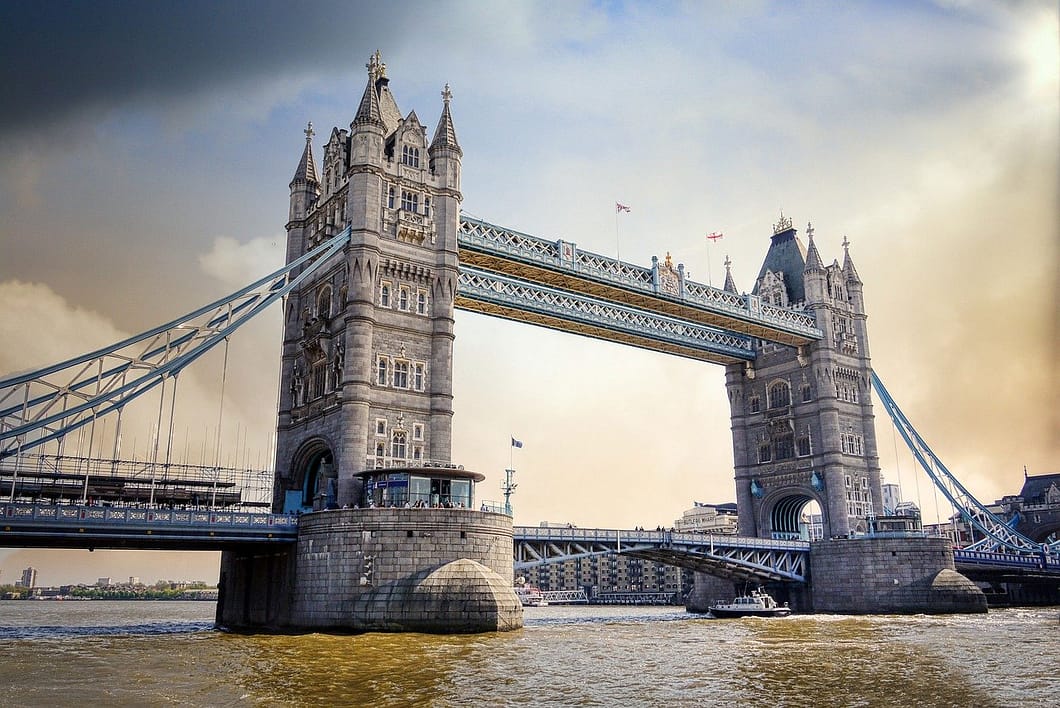
The British capital London is one of the largest and most modern financial centers in the world. Currently, there are no indications that the Brexit will change the attractiveness of the offshore location.
On the contrary: the exit of the country from the EU could result in a gradual decoupling of the financial system from the EU. This could benefit European investors. However, it will not be certain until the end of 2020 whether the UK will sign a new treaty with the EU or not.
Extensive cooperation is likely to make discretion in British banking more difficult. The British pound is one of the oldest and most stable currencies in the world. It is a highly diversified economy, but will likely have to cope with changing market conditions from 2021.
Opening an account in the UK normally requires a physical presence. In addition to classic offshore banking, the country is a leading Forex Trading center. An offshore account is ideal for minimizing currency risks.
There is no tax on Interest Income. There are no foreign exchange or capital movement restrictions in the country. The British deposit insurance (FSCS) protects assets of up to GBP 120,000 per person and bank in the UK. The limit was raised from GBP 85,000 on 1 December 2025.
GoodbyeMatrix recommends the following bank in the UK:

Barclays
Telephone: +800 800 88883^
Minimum Deposit £25,000 (or in other Currency)
Singapore

Singapore is an established financial center in Southeast Asia, which is currently gaining in importance. The City-State has been convincing for many decades due to its political stability and low taxes.
The legal system is very investor-friendly and guarantees the inviolability of private assets. The Republic's finances are absolutely solid, which rating agencies regularly confirm with top marks.
The appreciation of the city-state is shown by the fact that it is called the "Switzerland of Asia". Singapore is one of the wealthiest and safest countries in the world.
Capital gains do not have to be taxed. For Individuals who are not resident in Singapore and do not own a local company, the possibility of opening an account has deteriorated significantly. Banks are very selective and expect high initial deposits.
Multi-currency accounts are available. Singapore implements OECD and FATF (USA) money laundering regulations, which results in a large list of questions when opening an account. The banks want to be informed in detail about transactions and the source of Income.
An advantage is the strict banking secrecy, which, however, does not apply to the automatic exchange of information for tax purposes. Only Precious metals stored in Singapore are not covered by the CRS agreement and are anonymous. There are no foreign exchange restrictions or capital controls.
The financial institutions have the latest technologies that enable convenient and secure online banking. High capital ratios and liquidity ensure that Singapore's banks are among the safest in the world.
GoodbyeMatrix recommends the following Banks in Singapore:

DBS Bank Ltd
Tel.: 1800 221 1111
Minimum Deposit S$350,000

Citibank Wealth Banking
Tel.: +65 6224 5757
Minimum Deposit US$200,000

UOB Wealth Banking
Tel.: +65 6222 1881
Minimum Deposit S$100,000
Hong Kong

The former British colony of Hong Kong has been a special administrative region of the People's Republic of China since 1997. Increasing restrictions on civil rights have recently affected its good reputation as a financial center.
Nevertheless, the city remains the most important financial center in Southeast Asia. One advantage of offshore banks is their high liquidity and Hong Kong's function as a trading center between Asia, Europe and North America.
Another argument in favor of Hong Kong is its strict banking secrecy. However, the special administrative region also participates in the Automatic Exchange of information CRS. However, seizures and similar enforcement actions are not to be feared in Hong Kong.
In addition to local banks, many major international banks are represented in the city. Both transactions and the names of account holders are subject to strict protection. There are no capital market restrictions.
Banks almost exclusively have multi-currency accounts. This makes it easy and inexpensive to switch between different currencies. Account management is more expensive than in the EU. The costs for international transfers are particularly high.
Offshore accounts without residence in Hong Kong can usually only be opened through local presence.
Local banks are currently hardly willing to open accounts for foreigners. HSBC is relatively accessible. The account may have a maximum of HKD 100,000. Overdrafts are excluded.
GoodbyeMatrix recommends the following bank in Hong Kong:

Telephone: +852 2815 1123
Minimum Deposit 10,000 HKD (or in other currency)
Dubai and UAE
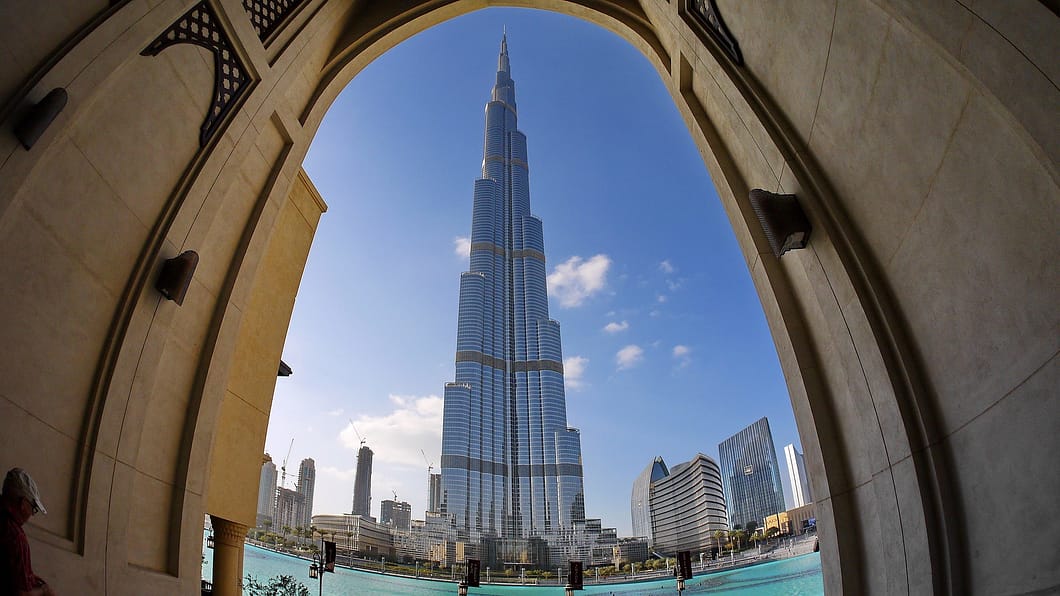
Dubai is among the most popular locations for an offshore account. The emirate is the most important financial center in the Middle East and offers a relatively comprehensive banking secrecy.
Since 2018, however, the United Arab Emirates have participated in the International Information Exchange CRS. The fact is that the United Arab Emirates has a low level of debt contributes. Public debt is only 18.6% of GDP.
Politically and economically, the Emirates are among the safest countries in the world. There are no currency restrictions. banks in Dubai offer high security standards. The central bank of the UAE requires high equity ratios.
The Emirate has no taxes on capital gains. There is a double taxation agreement with Germany. Accounts can be held in various currencies. There is a wide range of debit and credit cards.
The banks are connected to the SWIFT system. Transfers work simply via IBAN. The costs for an account in the Emirates are comparatively high. This affects account management and transactions. In addition, the institutions expect large amounts as an initial deposit. This is not the only reason why opening an account in the Emirates is associated with quite high hurdles.
Without companies or real estate, the compilance guidelines for foreigners are very strict. All documents must be original or a copy certified by a notary. A successful account opening is almost exclusively possible in connection with the establishment of a company or the ownership of real estate. The account opening requires your presence on site.
GoodbyeMatrix recommends the following bank in UAE:

First Abu Dhabi Bank
Telephone: +971(2)6811511
Minimum Deposit
3,000 AED Personal Call Account
500,000 AED for the Elite Account
Learn how to emigrate to Dubai and how to set up a tax-free free zone in our emigrant guide >> >>
Isle of Man

The Isle of Man is an ancient offshore jurisdiction in the Irish Sea. The British colony offers high legal security based on British legislation. In the Isle of Man, capital gains are tax-free.
The Isle of Man participates in the International Exchange of Information on Tax matters. The island is on the OECD's "white list". It is therefore not considered a problematic tax haven.
The British colony impresses with its political stability. The parliament is considered the longest standing in the world. Economically, the island developed considerable prosperity through the offshore sector in the financial sector. Because of the importance of this sector, the government should do everything possible not to disappoint investor confidence.
There are no foreign exchange restrictions. The Isle of Man is not a member of the EU, which makes it difficult for an EU country to access your account. The account can be managed in multiple currencies. This makes it ideal for balancing currency risks.
One advantage of the location is that the banking sector has a good Infrastructure and is not on any blacklist of tax havens.
GoodbyeMatrix recommends the following bank on the Isle of Man:

Standard Bank
Telephone: +44 (0)1624 643 643
Minimum Deposit £ 4,000
Classic offshore countries with a lot of banking flexibility
The Bahamas
The Bahamas are known for their discretion. In addition to maintaining banking secrecy, low taxes ensure that the Bahamas is a popular offshore financial center.
Entrepreneurs who set up a business in the Bahamas will find a very friendly environment. You receive complete tax exemption on foreign income for 20 years. There is currently no double taxation agreement with Germany.
The country also impresses with a high level of political and economic stability. The Bahamas Dollar is pegged to the US Dollar and has traded 1:1 for more than a decade. One third of the GDP is generated by the financial sector.
Foreign customers in particular ensure that the Bahamas are one of the most successful economies in the region today.
Banking secrecy is very strict. Violations are subject to heavy fines or imprisonment. However, the discretion of the banks is not unlimited, because the archipelago off the coast of Florida participates in the CRS data exchange.
The largest national bank is First Caribbean International Bank. In addition to the major international banks, many private banks also operate a branch in the Bahamas. Opening an offshore account is subject to a minimum deposit, which can be $50,000.
The costs for opening an account, account management and transactions are comparatively high. You will need an ID and proof of residency, such as a consumer bill, to open. Remote account openings are possible in the Bahamas.
The Bahamas has no restrictions on capital movements. Banking regulation is weak, which can pose a security risk. For service, banks often offer multilingual service. Online banking is also often available in multiple languages.
In addition to pure private banking, some banks in the Bahamas have specialized in brokerage accounts for stock exchange trading. This offshore brokerage offers the opportunity to circumvent EU trading restrictions for certain foreign products (ETF).
British Virgin Islands
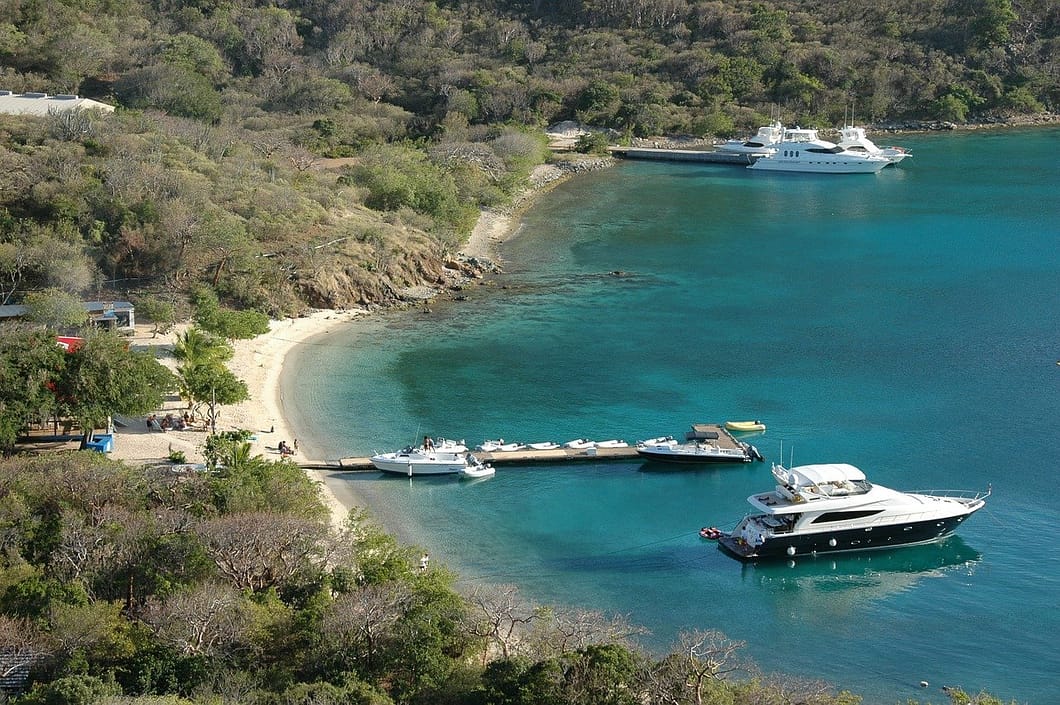
The British Virgin Islands (BVI) is an offshore jurisdiction in the Caribbean with a long tradition. A good three-quarters of a million offshore companies based here show that the Virgin Islands have earned an excellent reputation.
Investors enjoy not only tax exemption, offshore banking impresses with strict banking secrecy, breaches of which can result in hefty fines or imprisonment. However, it also applies here that complete anonymity does not exist.
The British colony has participated in the automatic exchange of information on tax matters since 2017. The islands do not have any restrictions on capital movements. Opening an offshore bank account requires an initial deposit.
Thanks to a good communication network, online banking can be carried out without any problems. This means that your BVI account is available around the clock. In addition to the economic power of the offshore sector, the UK Virgin Islands rely on tourism.
Security for your assets is provided by political stability. The law is based on British Traditions.
Panama
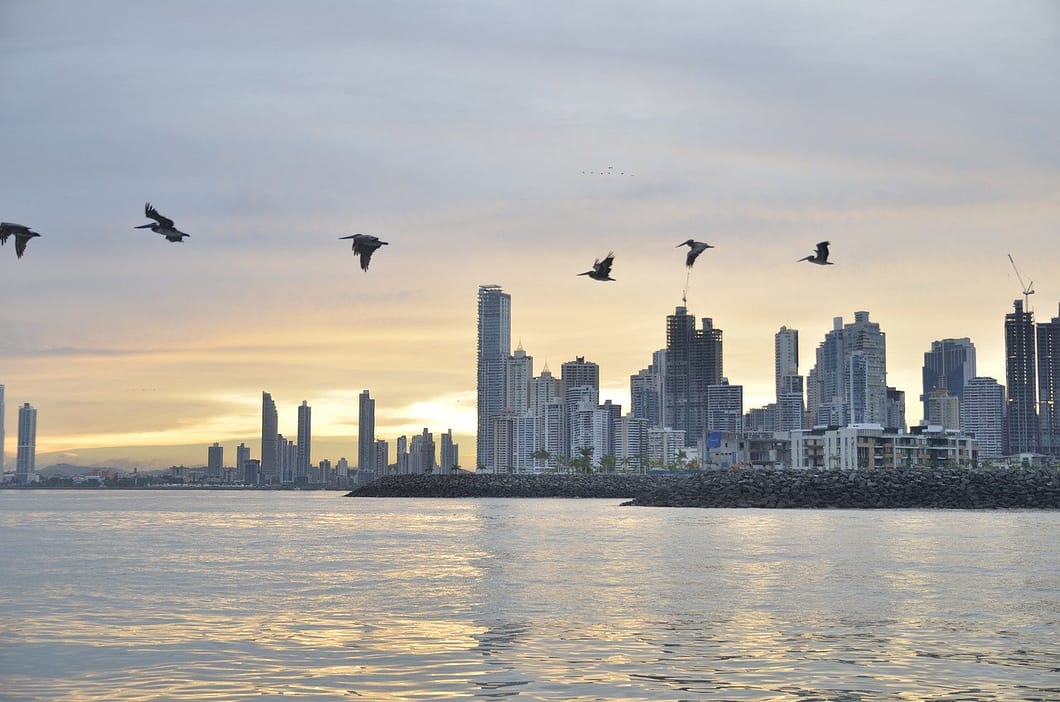
Panama is one of the well-known tax havens in Central America. However, the country is currently trying to get rid of its bad reputation.
Today, banks have high requirements for their non-resident clients. Without residency, opening an account in Panama has become more difficult. When opening the account, the banks expect extensive documents, including information about the transactions and previous accounts.
It is easier when setting up an offshore company or if there is a residence in the country. The goal is to counter the appearance of supporting money laundering.
If the bank accepts an application to open an account, you will receive all the services of a modern account. This includes efficient and secure online banking. Credit cards are often offered free of charge.
Panama has strict banking secrecy, although this has been eroded by participation in the automatic exchange of information since 2018. International transactions are carried out by the banks in US dollars. The service is provided in Spanish or English.
There is no minimum deposit required to open an account. Panama has no restrictions on foreign exchange or capital movements, and direct taxes do not exist. Panama is still considered an ideal financial center for investors from all over the world.
The standard of living is high and the country has a politically stable system. Thanks to the pegging of the economy to the US dollar, the country has weathered crises better than other Latin American countries. The law is aimed at protecting private property.
The authorities work quickly and are citizen-oriented. Measured by the region, Panama has a low crime rate. In addition to offshore banking, investors like to use the country to invest in real estate. The country also offers few hurdles for acquiring a second citizenship.
Belize
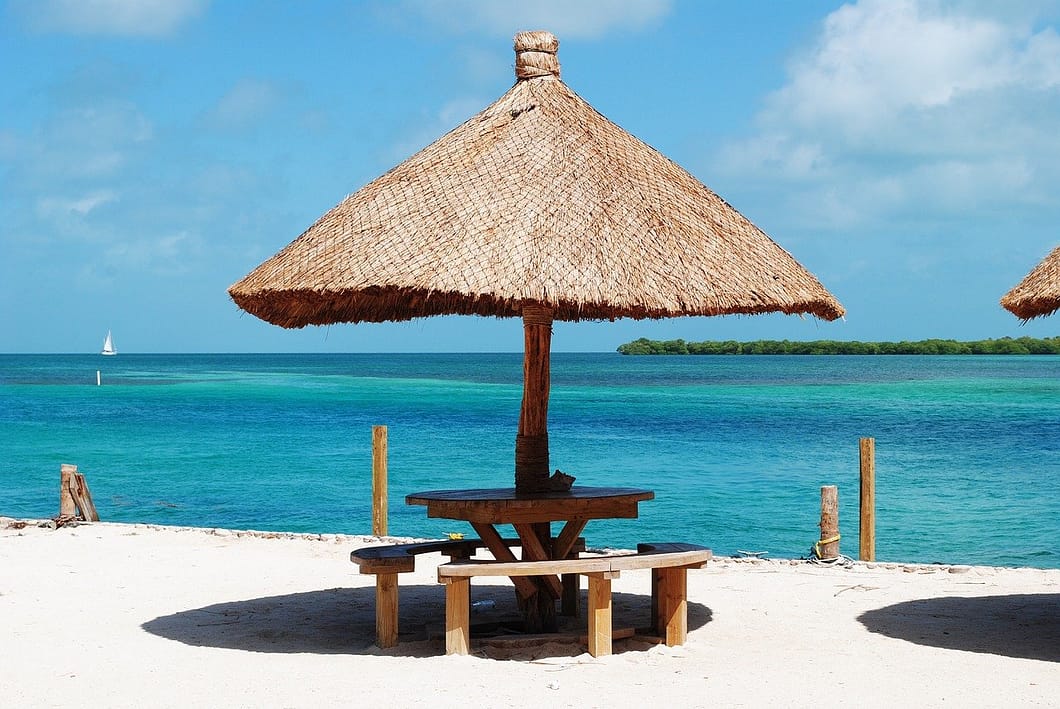
If you like discretion, Belize is the right place for you. There are No taxes in the country for foreign business, which is an argument for company founders. In addition, there is a high level of discretion.
Belize's legal system is similar to the British common law system. The country has stable political and economic conditions. Belize has strict banking secrecy, but there are exceptions.
For example, the country has participated in the automatic exchange of information CRS since 2018. The liquidity requirements in Belize guarantee a very high level of deposit security. Banks must have 24% of all deposits on hand. This makes it very unlikely that a bank can encounter payment difficulties.
The Belize dollar is pegged to the U.S. dollar at a rate of 2:1. As an offshore financial center, the jurisdiction guarantees asset protection. There are no restrictions on capital movements. Accounts can be held in any reserve currency.
There is no capital gains tax in Belize. However, this is of no use to you if your residence is in Germany. Then you have to pay tax on capital gains from abroad in Germany.
Access by EU authorities is not possible at least if you do not open your account at a branch of an EU bank. The service is provided in English. Many banks offer a great deal of flexibility with regard to Stock Market Trading.
Investors can trade anonymously through banks in Belize. The banks attach great importance to a good online service, which also includes good data protection. The time difference of eight hours, which makes communication with the bank difficult, could speak against opening an account.
Although the banks do not require an initial deposit, they do require a mostly moderate minimum deposit. It differs depending on the bank, although banks with good service usually have higher requirements. Remote account opening is available in Belize, but not all banks offer it. Once all documents are complete, the formalities for opening an account can be completed quickly.
Dominica
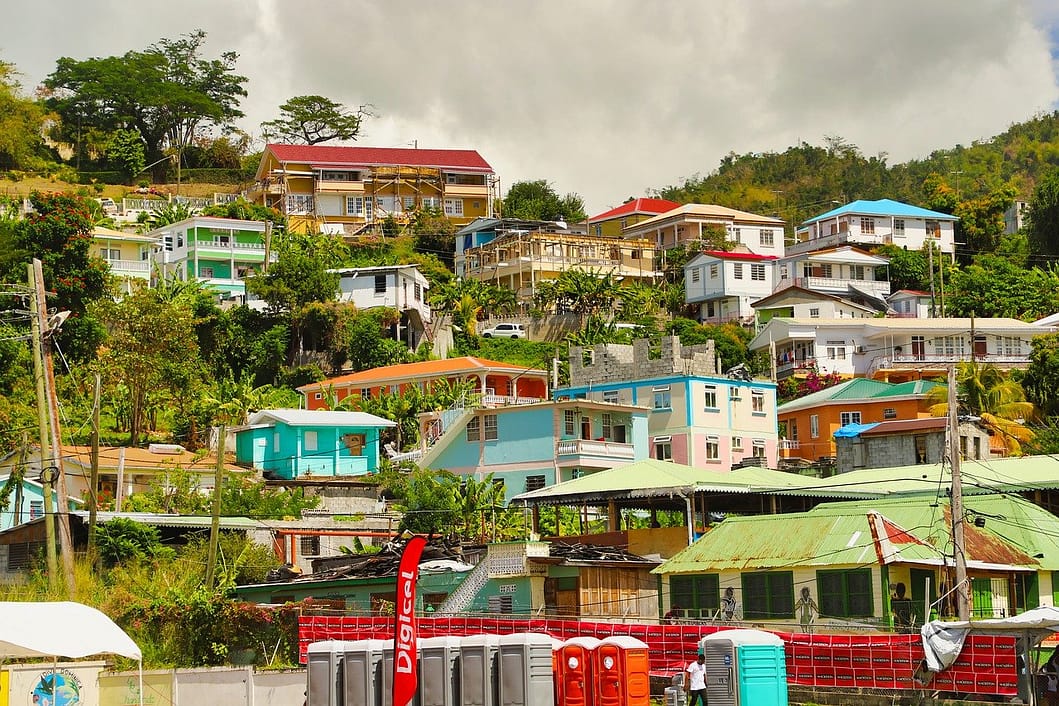
Dominica is not as well known as a tax haven as other jurisdictions, although the country attracts investors with discretion and long tax exemptions. Discretion also prevails when opening an offshore bank account.
Dominica has officially participated in the international exchange of information CRS since 2018, but has not actually exchanged any data so far. The country is economically weak.
It is located in the tropical hurricane area and still bases much of its economy on agricultural products. Its top export is bananas. The government is making efforts to diversify the economy.
At 83 % of GDP, Dominica's public debt is among the lowest in the Caribbean. In addition, however, there is a fairly high foreign debt. The population is not rich, but wealth is relatively evenly distributed. This prevents social unrest.
Opening an account does not require personal presence. Multi-currency accounts are available. Money transfers and account management are comparatively cheap. Account opening is linked to an initial deposit of $1,000 or more.
Opening an account does not require personal presence. Multi-currency accounts are available. Money transfers and account management are comparatively cheap. Account opening is linked to an initial deposit of $1,000 or more.
Seychelles

The Seychelles are an interesting offshore banking location for investors due to their low taxes and political stability. There are no taxes on capital gains.
The OECD does not list Seychelles as a tax haven. The country has concluded OECD-compliant tax treaties with numerous countries. However, there is no agreement with Germany on the avoidance of double taxation.
Economic life takes place in the capital, Victoria. The strengths of the archipelago lie in the strict banking secrecy. However, it is affected by the automatic exchange of information for tax registration.
The legal system is based on British traditions. The government places a lot of emphasis on supporting the business location in its legislation. There is a mixture of civil and common law.
The financial market is only slightly regulated in the Seychelles. Access to an offshore bank account is correspondingly easy. However, in recent years the archipelago has increasingly implemented rules to combat money laundering. An application to open an account includes questions about the source of the money and how you earn your income.
There are no restrictions on the movement of capital. In the absence of effective banking regulation, control of balance sheets and operations is important. You should choose a bank whose business field is private banking.
For communication, the country offers a good infrastructure. Online banking allows you to use all the necessary functions. The service is provided in several languages, including German in some cases.
Mauritius
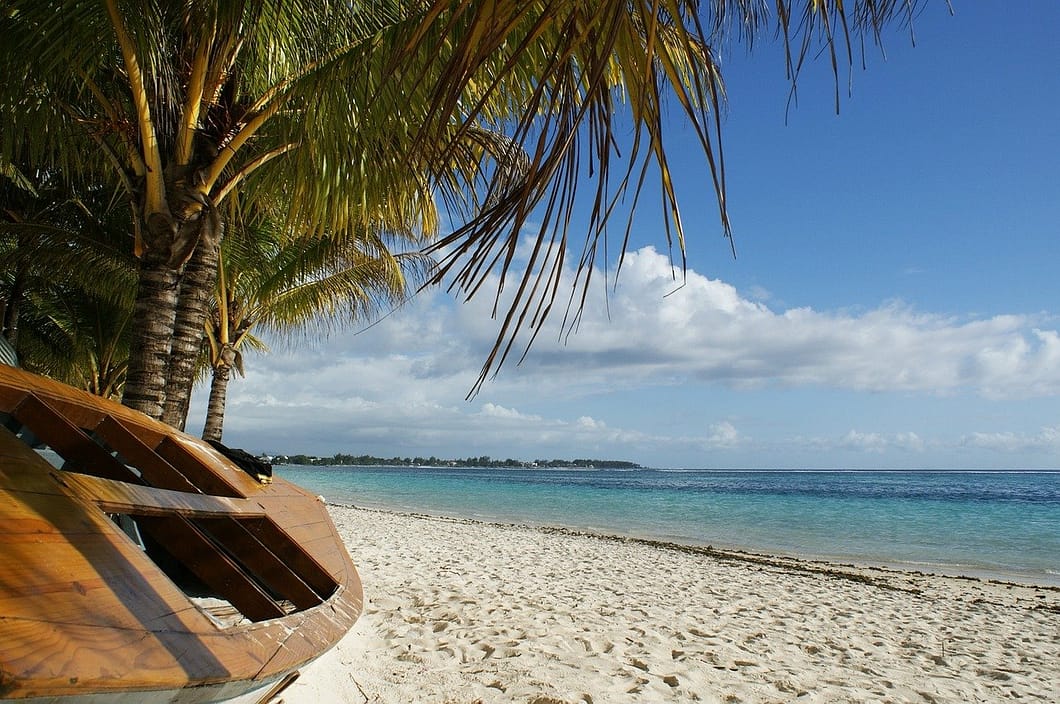
Mauritius is an island country in the Indian Ocean that is part of the commonwealth. The country is interesting for Investors because of its low taxes. The problem is that the country is run as a tax haven in the EU.
A high degree of discretion makes the island a sought-after location for offshore banking. Anyone who violates banking secrecy must be punished with high fines or imprisonment.
The two largest banks in Mauritius have investment grade ratings. In addition to the Mauritius Commercial Bank and the Bank of Mauritius, many major international banks are represented with branches.
There is little regulation in Mauritius, so the requirements for opening accounts are correspondingly low. Exchange controls are just as unknown as capital controls.
The legal system is designed to attract and retain investors. Mauritius is politically and economically stable. GDP per capita is among the highest in Africa.
The country has a good communications infrastructure, which also allows for solid online banking. Some banks even offer a German-speaking service. Your offshore account is available around the clock, every day of the week.
The government abolished foreign exchange controls, but there are still reporting requirements. This involves information about profits from foreign investments and their repatriation.
GoodbyeMatrix recommends the following bank in Mauritius:

SBM
Telephone: (+230) 202 1111
Minimum deposit 50.000 Euro
Please contact us for more information >>
High interest income
Georgia
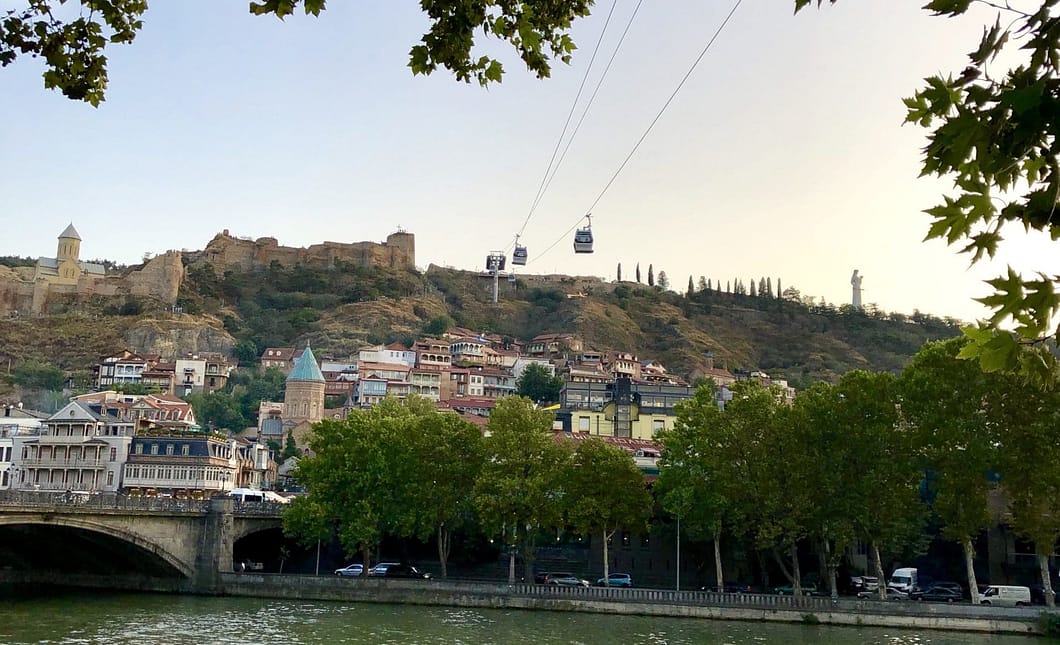
For several years, Georgia has been developing into a place that Investors like to use for business. Due to territorial taxation, there are no taxes on business abroad.
The country offers a liberal legal system, which provides security especially for investors. The economic liberty act prevents tax increases or the introduction of new taxes.
The country is not far from Europe and has good relations with the EU. However, it is not a member of the EU and protects property from seizure by third parties. Account seizure by authorities from the EU are practically impossible.
Georgia does not currently participate in the automatic exchange of Information CRS. The country wants to implement the OECD requirements from 2023.
Opening an account is very easy and can also be done without proof of residence. Remote opening is allowed. Georgia is also a good place to open a brokerage account.
Opening an offshore account sometimes requires a minimum deposit. For a private banking account, it is at least 500,000 Georgian lari, which corresponds to around 125,000 euros. If you want to open priority banking with SOLO Bank, you need at least 10,000 euros, but the minimum deposit for an account with TBC is 0 euros. They are multi-currency accounts.
Compared to most other countries, there is a fairly high interest rate in Georgia. Account maintenance fees are low and include various credit card options.
Compared to most other countries, there is a fairly high interest rate in Georgia. Account maintenance fees are low and include various credit card options.
GoodbyeMatrix can help you open an account remotely at the following banks:

TBC Concept
All details about the remote opening here >>


Bank of Georgia Wealth
Minimum deposit 500.000 GEL
All details about the remote opening here >>
Other Countries
Luxembourg

Luxembourg is one of the most important financial centers in the world. However, the Grand Duchy is not very attractive for people residing in the EU. The country must comply with all EU regulations, which includes the generous exchange of data with member state governments.
Your EU home country can block or seize your account in case of legitimate claims. Due to its membership in the Eurosystem, Luxembourg also drops out as a location for currency diversification. Furthermore, Luxembourg would be affected in the event of a new euro crisis.
In general, Luxembourg offers a favorable tax environment. An extensive range of banking services and a reputation as a good location for Forex trading make the Grand Duchy quite attractive outside Europe.
The economic power of the location is reflected in its market capitalization, which is higher than locations such as Hong Kong or Singapore. At the same time, the OECD does not list the country as a tax haven. The account opening is tied to a high initial deposit amount.
Andorra

Andorra has advantages if you live there. There are hardly any income and wealth taxes.
VAT is only 4.5 percent. Companies pay a flat rate of ten percent on profits. However, there is a strong exchange of information with the EU, which makes Andorra uninteresting as an offshore financial center for EU citizens.
French and Spanish citizens like to open accounts in the small Pyrenean state because the country has very healthy banks. The equity ratio and liquidity are above the EU average. Accounts can be opened even without residency in Andorra. However, the requirements are high.
In addition to meeting anti-money laundering standards, you must prove the origin of your assets. In addition to proof of the correct address (consumer invoice), the banks expect a reference from the current account-holding institution and proof of income.
Also, the institution is interested in your current activity. The banks offer multi-currency accounts, but they are very expensive due to the low competition of only five banks. The banks are integrated in the SEPA System.
The financial institutions are not supported by the European Central Bank and therefore develop more conservative business strategies. This makes them more resilient to external crises. Andorra participates in the automatic exchange of information CRS and strictly complies with all anti-money laundering agreements.
Cyprus

Cyprus' reputation as a financial center suffered tremendously in 2012/13 during the financial crisis in the EU. For EU citizens, the country is not a good place for an offshore bank account due to Brussels' regulations on information exchange.
In addition, there is the possibility of access to the account by EU authorities. They can block your account at any time. With a new bail-in legislation, the EU bureaucrats have worked out the right.
The island continues to be popular with Russian investors. For the opening of the account is necessary to be present in person.
USA
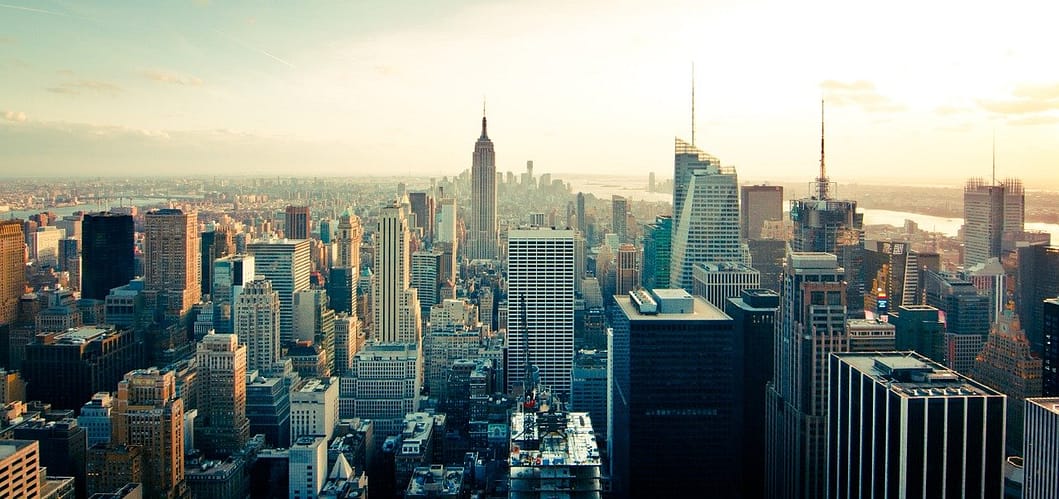
The USA is a world power. China is clearly catching up, but the United States is still the world's largest economy.
Even if the national debt increased significantly under the Trump administration, the USA still has the highest credit rating from all rating agencies. The Federal Reserve (Fed) has relaxed regulations for banks in recent years.
The minimum requirement for the equity ratio is only 4.5 percent. According to Fed studies, the US branches of European banks are particularly solid. The liquidity in the financial system is ensured by the Fed. Financial experts have different forecasts as to whether this will eventually lead to upheavals in the financial market.
A very large derivatives market is creating additional risks in the financial system. Many major U.S. banks are involved in risky speculation on the investment market. Time and again, banks have to answer for price manipulation.
The US dollar is still the world's reserve currency. However, there have been efforts for years to reduce dependency on the dollar, particularly in the Arab world (oil) and in China.
The USA is fighting tax havens worldwide, but at the same time consistently refuses agreements such as the OECD data exchange CRS. The USA is one of the largest tax havens in the world for non-Americans.
Opening an account is easy, the costs are manageable. Banks offer multi-currency accounts. Remote opening is possible in some cases. Various credit card options are available with the account. The U.S. government prohibits the transfer of U.S. dollars to countries on a sanctions list.
How to open an offshore account
Opening an account has become more complicated in recent years. The days when you could open an account anonymously are long gone.
As part of anti-money laundering rules, "know your customer rules" are applied in almost every country. Most banks want to know very clearly who they are doing business with.
With these measures, most countries try to avoid being branded as a tax haven or money laundering haven. Countries that do not meet the requirements have locational disadvantages for companies. For an offshore jurisdiction, this is an existential risk.
Digital nomads are unlikely to get an account in the safest offshore locations. In most countries, banks require proof of residence. A solid idea in this case is Georgia, where the proof is currently not required.
It makes sense not to wait too long to open an account, as the requirements are generally getting stricter. However, once you have an account, it is usually not closed. Only in the case of a long period of inactivity will the financial institutions sometimes take action on their own initiative.
A utility bill is used to authenticate the address, which is obligatory in most cases in addition to presenting your passport. There is also information about the origin of deposits and about the company's own business activities. It must be as complete as possible.
In addition to bank statements, documents on real estate sales, inheritances, employment contracts, diplomas, patents and licenses, and investment contracts are of interest. Documents from countries where corruption is commonplace must be certified by a notary and apostille.
An apostille is a certification that the notary really exists. If the bank finds evidence of business that contradicts its values, the opening of an account can fail. Business in a problematic state such as Cuba, Libya, Congo or Iran is viewed critically by banks.
This is also true of business from sensitive areas. These include the precious metals and art trades, real estate, armaments, crude oil or gas, and adult entertainment. Nightclubs or casinos also do not fit into the world view of any bank.
However, do not hide your economic past. Then it is extremely important to find a bank that is familiar with this business.
A dating coach is better called an interpersonal relationship coach. Dating is a negative word that can become a knockout in the application process.
Contact with the bank is usually done in person or via mail. Personal contact creates a basis of trust. While a number of banks still offer remote account opening, it is often more tedious than opening an account on-site.
In general, however, opening an account with identification via webcam is possible in many countries. It saves the trip that can potentially lead halfway around the globe.
If possible, you should clarify important questions before the application. This way you can complete the application in the form expected by the bank. This ensures that there are no misunderstandings that could lead to the rejection of your application.
This is how you further diversify your assets
Offshore accounts are well suited to diversify liquid assets, to protect against access by domestic authorities or to minimize currency risks. In addition, there are other ways to diversify and hedge money.
FinTech Banks
FinTech banks are only a subset of FinTechs. The term "banks" is partly misleading. The business idea is to offer financial services via innovative solutions.
The offerings are easy to use via the Internet and are characterized by a lean fee structure. Customer service is usually limited to chats and call centers, although telephone service may already cost money.
Service providers are very popular for international money transfers because they execute money transfers cheaply and quickly thanks to innovative technology. One very established company is TransferWise.
The most companies do not have their own banking license and access services from established banks for many products. This often does not pose a problem for the security of customer deposits.
Reputable FinTechs place customer funds separately from current assets in accounts of licensed banks. If the FinTech company goes bankrupt, the customer money would not go into the bankruptcy estate in this case.
When choosing a bank, you should pay attention to this fact. Then these companies are quite helpful. They offer multi-currency accounts to minimize currency losses.
As financial service providers, the companies are licensed with financial regulators. A debit card should be included with the account. Current account or credit cards A separate banking license, on the other hand, is rare.
The German Bank N26 is one of the few FinTech companies that has a full banking license and is regulated accordingly. A FinTech bank that has neither a banking license nor a licensed bank as a cooperation partner is dangerous. There is a significant risk of loss here.
GoodbyeMatrix recommends you the following FinTech banks & service providers:

TransferWise
Very good for foreign transfers & as a personal and business account.

Fidor Bank
Very good for buying cryptocurrencies and as a checking account.

Bitwala
Very good for buying cryptocurrencies.
Crypto Currencies
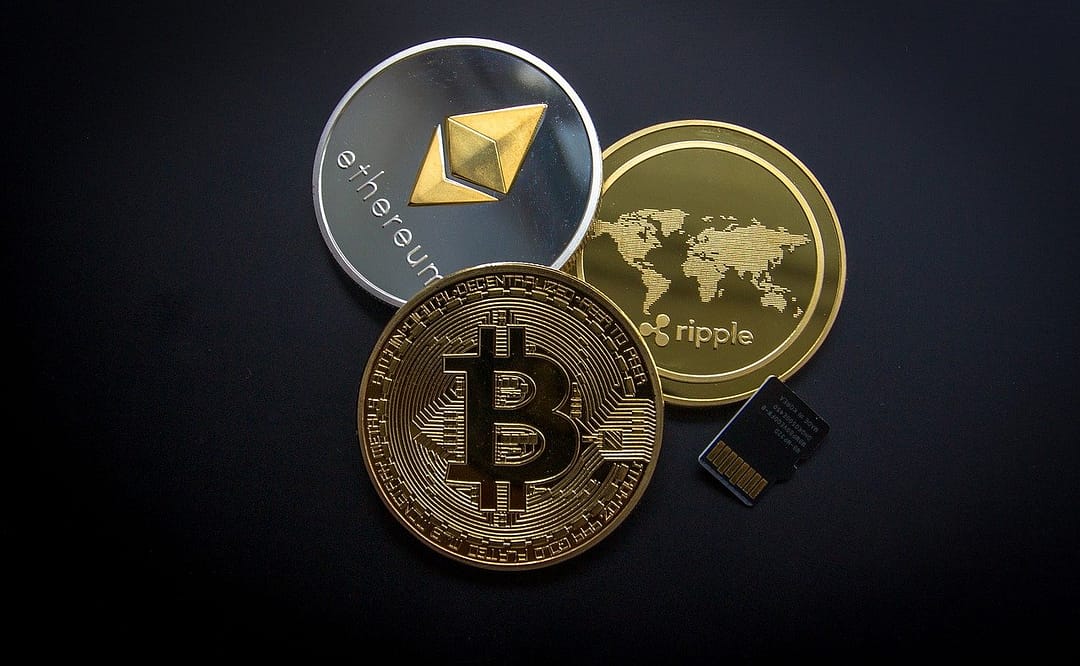
Digital means of payment have now established themselves. Acceptance is growing, especially online. They are also interesting as a store of value. The term "currency" in connection with cryptos is controversial rather you can refer to them as "asset".
Bundesbank President Jens Weidmann, for example, prefers to speak of tokens. He says they are only of limited use as a means of payment, store of value and unit of account.¹³ To be honest, in view of the devaluation of money due to inflation or events such as those in Greece as well as Cyprus, it must be noted that central bank money can also only serve as a store of value to a limited extent.
The advantage of cryptocurrency exchange is decentralized organization, which makes it much more difficult for authorities to access the assets. Thus, cryptos fulfill an important point for asset protection.
Wenn Du "Steuern sparen" möchtest, sei Dir gesagt: Kryptos werden zwar gern für kriminelle Geschäfte genutzt, aber sie fliegen gelegentlich auch auf. Steuerhinterziehung ist kriminell. Kryptowährungen sind aber nicht für illegale Geschäfte geschaffen worden.
Their revolutionary technology provided a much safer, faster, and cheaper way to transfer security-related data. The assets invested in these electronic payment methods are very safe due to the cryptography used.
The cryptographic chaining in a blockchain cannot be manipulated and thus prevents money transfers from being manipulated.
Real disadvantages are the expected strict government regulation and the sometimes high fluctuations in value. These are not as high for stable coins, but cryptos are still more of a medium- or long-term investment.
As technical processes make the creation of crypto tokens increasingly costly, there will be a shortage of supply. Demand is already rising faster than supply. An ideal store of wealth is cryptos backed by physical gold.
Unfortunately, there is also fraud in this area. One of the biggest scams was One Coin.¹⁴ The initiators built an impressive Ponzi scheme and then went underground. You should make sure that cryptocurrencies are freely traded on exchanges.
GoodbyeMatrix recommends you the following crypto exchanges & service providers:

Binance
Innovative and largest crypto exchange.

Bitfinex
Big Crypto Exchange.

Crypto.com
Very good for buying cryptocurrencies.
Precious metal

Gold, silver and platinum should be in your portfolio for asset protection. It is important that you have physical possession of the precious metal and store it in a safe place.
Gold or silver coins are perfect to be liquid quickly in a crisis. In view of the extreme expansion of the money supply by central banks, inflation is only a question of time.
One reaction of states to crises in the past was also the expropriation of precious metals. Therefore, you should store only some coins for short-term liquidity in your home vault. The rest is safer in a secure location outside your country.
More about storage of precious metals you can find here >> >>
GoodbyeMatrix recommends the following precious metal Vault:

Silver Bullion
Precious metal vault and dealer in Singapore.*
For more information on Singapore and Silver Bullion and a stock discount, check out our Insider Video Course>>
FAQ
Nothing is 100% secure. If creditors know about the account abroad or the state and the claims are large enough, an attempt can also be made to seize a foreign account.
There are jurisdictions in which a seizure is almost hopeless. You shouldn't rely on that.
Nevertheless, an account abroad offers an effective protection of your funds, since it is much more complicated, time-consuming and cost-intensive to seize a foreign account.
Please note that we never call for illegal activities here or advocate cheating of creditors and we clearly distance ourselves from tax evasion, money laundering and the like! Make sure that your finances are always in good order, then you have nothing to fear.
You are also welcome to read our chapter "Protection of assets and expropriation".
Yes, but not always. There are banks that offer online opening. For example, Bunq Bank in the Netherlands or many FinTech banks in Germany.
Sometimes you can also open an account remotely abroad. For example, we can help you open an account remotely in Georgia or Mauritius.
However, many reputable banks in certain countries require a personal presence on site to open an account or have completely eliminated the possibility for non-residents.
In most countries, this is no longer possible. Banks need a lot of information from their customers in order to comply with international agreements such as the CRS agreement.
Furthermore, money laundering, terrorism and tax evasion are to be prevented and for this purpose strict KYC and AML guidelines have been introduced. There are very few countries where it is possible to open an account without proof of residence. One possibility is Georgia.
No, there is no such thing. Only German banks have a German IBAN, foreign banks which are connected to the IBAN system have country codes of the respective country.
Due to many agreements between countries and active fight against tax evasion of countries, an anonymous account abroad is no longer possible. For example, once a year, through the CRS agreement, all account balances are automatically reported to the tax residence.
A large number of countries worldwide already participate in this agreement. Having an anonymous numbered account abroad is therefore no longer possible and can only be seen in old movies.
No, this is not possible.
This was our guide about offshore accounts & banking!
Do you have any questions? Feel free to leave us a comment!
Quellen:
¹ https://dr-fassbender.de/zwangsvollstreckung-schweiz/
² https://www.zeit.de/wirtschaft/2016-10/steuer-cds-europaeischer-gerichtshof-menschenrechte
³ https://ec.europa.eu/commission/presscorner/detail/de/IP_16_1752
⁴ https://www.ceicdata.com/de/indicator/georgia/policy-rate
⁵ https://www.bundesbank.de/resource/blob/612684/b6bd0bbfadec4412a8a5a54630ea8060/mL/auszug-aus-der-awv-data.pdf
⁶ https://www.edb-banken.de/verbraucher/faq/
⁷ https://www.deutschlandfunk.de/umstrittene-einlagengarantie-absicherung-mit-unsicherheiten.769.de.html?dram:article_id=429805
⁸ https://www.gesetze-im-internet.de/sag/SAG.pdf
⁹ https://www.handelsblatt.com/finanzen/vorsorge/altersvorsorge-sparen/bericht-der-bundesbank-privates-geldvermoegen-steigt-in-der-coronakrise-auf-rekordhoch/26281266.html
¹⁰ https://www.haufe.de/recht/kanzleimanagement/kontenpfaendung-seit-dem-18012017-eu-weit-moeglich_222_394802.html
¹¹ https://web.archive.org/web/20090417031644/http://www.ftd.de/unternehmen/finanzdienstleister/:Gewaltiger-Uranvorrat-Lehman-Brothers-und-die-Atombombe/499823.html
¹² https://www.finma.ch/de/news/2014/11/mm-ubs-devisenhandel-20141112/
¹³ https://www.spiegel.de/wirtschaft/soziales/bitcoin-bundesbankchef-jens-weidmann-haelt-digitalwaehrung-fuer-ineffizient-a-1193487.html
¹⁴ https://www.fr.de/wirtschaft/der-milliardenbetrug-90053765.html
*Der Autor, Sergio von Facchin, ist Shareholder von Silver Bullion Pte Ltd.
Copyright 2026 Goodbye Matrix International LLC, all rights reserved. Impressum