Secure Your Second Citizenship - While the Window Is Still Open
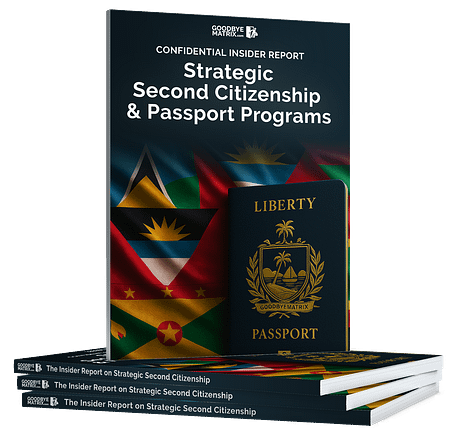
Request access to our confidential strategic report outlining the key pathways to a second passport — insights typically discussed only in private advisory settings.


A tax levied on unrealized capital gains when a person ceases to be a tax resident, treating departure as a deemed sale of assets.
Exit tax is the mechanism by which developed nations prevent accumulated wealth from escaping taxation: the moment you move and establish non-residency, the tax authority deems your assets notionally sold and assesses capital gains tax on all unrealized appreciation — regardless of whether you actually sold anything.
A taxpayer owns shares worth USD 2 million purchased for USD 300,000 ten years ago. They relocate and establish non-residency. The origin country's exit tax treats the departure as a deemed disposal, triggering tax on the USD 1.7 million unrealized gain — even though no sale occurred.
Exit taxes exist in various forms across multiple jurisdictions: the USA (expatriation tax under IRC §877A for covered expatriates), Canada (deemed disposition rules on departure), Australia (deemed disposal on foreign residency), France, and a growing number of OECD countries. In practice, exit taxes represent one of the largest financial barriers to relocation for successful entrepreneurs and investors.
The Exit-Architect's role is critical here: structuring your departure to minimize exit tax exposure through timing, corporate entity transfers, or strategic asset repositioning before the move. Understanding exit tax — and engineering around it — separates amateurs from strategists in sovereign architecture.
Access our confidential strategic briefing outlining:
• The 5 most efficient and legally structured paths to a second passport
• Jurisdictions offering accelerated citizenship programs
• Proven investment and ancestry routes for capital and family protection
• How high-net-worth entrepreneurs diversify sovereign risk
This is not about travel perks. It’s about long-term control, asset protection, and jurisdictional leverage.
Learn more about the report
Most people live where they were born. Not where it makes strategic sense. They choose a country. Sovereign individuals build a setup.
A strong international setup considers:
Not just a visa.
In the strategy call, we evaluate which residency programs make strategic sense - and which ones could limit you long-term, create unnecessary obligations, or lead to avoidable tax exposure.
Build an international setup that gives you options - not dependencies.
Copyright 2026 Goodbye Matrix International LLC, all rights reserved.