
Austria Self-Employed Residence
For self-employed professionals, the Self-Employed Residence is the Austria visa within the Red-White-Red framework.
- Property investment
- €100,000
- Visa-free
- 186 countries
- with the passport
- Presence
- 183 days/year
- Status
- Temporary residence
- 2 years
01 · OVERVIEWWhat makes this program stand out
For self-employed professionals, the Self-Employed Residence is the Austria visa within the Red-White-Red framework. Austria's Self-Employed Residence operates within the Red-White-Red framework and targets qualified third-country nationals who intend to establish and pursue a defined self-employed activity on Austrian territory. The program is classified as an Active Investor Visa, meaning it requires operational engagement rather than passive capital placement. Applicants receive a 24-month residence permit to execute their business plan and deliver measurable macroeconomic contributions to Austria.
Qualification is based on demonstrating that the proposed activity will generate benefits beyond the immediate business itself. This means the venture must create positive spillover effects for the Austrian economy. Three primary pathways satisfy this requirement: direct capital investment of at least €100,000, verifiable job creation, or documented technology transfer into the Austrian market. The authorities assess whether the activity meets this threshold before issuing the permit.
The initial permit runs for 24 months. Upon expiration, the main applicant becomes eligible to apply for permanent residence in Austria. Physical presence of 183 days per year in Austria is required to maintain status. After 10 years of continuous residence, the pathway to Austrian citizenship opens. Austrian citizenship grants access to 186 countries visa-free.
Processing timelines are not explicitly specified in the official framework. Applicants should plan for administrative review periods that accommodate due diligence on the business plan, capital sourcing, and economic impact assessment. The €100,000 minimum contribution must represent sustained transfer of investment capital into Austria, not merely a temporary deposit or reversible transaction.
02 · INVESTMENT & COSTSInvestment and costs
What minimum capital commitment is required
The €100,000 investment capital transfer is the primary financial commitment for this residency pathway. This amount must be sustained and transferred to Austria as demonstrated evidence of your macroeconomic contribution.
The capital transfer serves as one qualifying criterion among several options. You may satisfy the €100,000 threshold through a single sustained transfer, or demonstrate your contribution through alternative means: job creation, technology transfer, or regional business significance. The investment capital pathway is the most straightforward for applicants with available capital and no immediate job creation plans.
Timing is flexible within the application process. The transfer should be documented and completed before or during your residency approval to evidence your commitment to Austria. Documentation must show clear origin and legitimate source of funds; the Austrian immigration authority conducts standard due diligence on all capital transfers.
The capital remains your property once transferred. You are not required to invest it in a specific business structure, purchase property, or lock funds in a designated account. The requirement is transfer to Austria and sustained presence of the capital within the Austrian financial system, typically demonstrated through business bank accounts, company capitalization, or investment accounts held within Austria.
03 · CLASSIFICATIONFlag Theory 3.0 classification
04 · REQUIREMENTSWhat you need to qualify
Qualification centers on demonstrating macroeconomic benefit through the planned self-employed activity. Applicants must satisfy at least one of four defined contribution categories, alongside foundational eligibility requirements.
Macroeconomic Contribution (one or more required):
- Investment Capital Transfer: Sustained transfer of at least €100,000 in investment capital to Austria. The capital must be genuinely deployed, not merely deposited and held.
- Job Creation: Creation of new jobs in Austria or securing existing employment positions through the business activity.
- Technology Transfer: Introduction of new technologies or transfer of specialized know-how to the Austrian market.
- Regional Significance: Demonstrated considerable significance of the business for the region where operations are based.
Means of Subsistence: Fixed, regular personal income sufficient to cover all living costs without recourse to Austrian welfare assistance. Reference monthly minimums as of 2025: €1,300 for single applicants; €2,000 for couples; plus €200 per additional dependent child. Housing costs are factored into this assessment.
Health Insurance: Comprehensive health coverage valid in Austria that covers all medical risks. Austrian public insurance obtained through employment within the business satisfies this requirement where applicable.
Accommodation: Proof of secured housing in Austria. Costs are assessed as part of the means of subsistence calculation.
Applicants must sustain 183 days physical presence annually in Austria to maintain residence status and progress toward permanent residency.
05 · BENEFITSWhy this program may be worth considering
Austria's Self-Employed Residence delivers three layers of operational advantage once the permit is issued. First, the 24-month initial permit grants freedom of movement throughout the Schengen Area without settlement rights in other member states. You can travel visa-free across Schengen for business, networking, and operational purposes while maintaining your Austrian base.
Second, the program offers accelerated access to permanent residency after just 2 years. This is among the shortest timelines in Europe for transition from temporary permit to permanent residence. Once permanent residency is secured, you gain long-term stability independent of the original business activity. The pathway to Austrian citizenship opens after 10 years of continuous residence.
Third, Austrian residence positions you within the EU single market infrastructure. This means enhanced business access to 450 million consumers across the European Economic Area without additional licensing or permits. You operate from a jurisdiction recognized for institutional stability, contractual predictability, and strong rule of law.
Education opportunities are a fourth structural advantage. Austrian public universities charge minimal tuition fees, and residence status grants access to the entire Austrian education system for dependent children. This includes bilingual and international schooling options concentrated in Vienna and major urban centers.
Safety and security rank consistently high across international indices. Austria maintains low crime rates, political stability, and comprehensive public infrastructure. The operational environment is predictable; regulatory frameworks are transparent and consistently enforced.
Processing timelines are reported as short relative to comparable European programs, though exact durations depend on completeness of documentation and the complexity of economic impact assessment. The absence of quota restrictions means applications are evaluated on merit without artificial bottlenecks.
Austrian citizenship, once acquired after 10 years, grants visa-free or visa-on-arrival access to 186 countries globally. This positions Austria in the top tier of passport strength rankings, providing long-term mobility optionality for entrepreneurs building international operations.
06 · PATH TO CITIZENSHIPHow the path to citizenship works
After 10 years of lawful residence in Austria, you become eligible to apply for Austrian citizenship. This waiting period includes the initial permit phase and the transition through permanent residency.
An accelerated pathway reduces the timeline to 6 years for applicants who demonstrate B2-level German proficiency or exceptional integration into Austrian society. The assessment of exceptional integration is discretionary and evaluated case-by-case by the authorities.
Austria does not permit dual citizenship. You must relinquish your existing citizenship before Austrian nationality is granted.
07 · LEGAL BASISWho oversees the program and what it is based on
Responsible authorities: Austrian embassies and consulates abroad, or the competent residence authority within Austria (Provincial Governor or authorized regional/local administrative authority).
The program is based on the Settlement and Residence Act (Niederlassungs- und Aufenthaltsgesetz, NAG) of 2005.
These solutions could be relevant for you
Based on your answers we picked a few options that may fit. In the consultation we work out which of them actually makes sense for your situation.
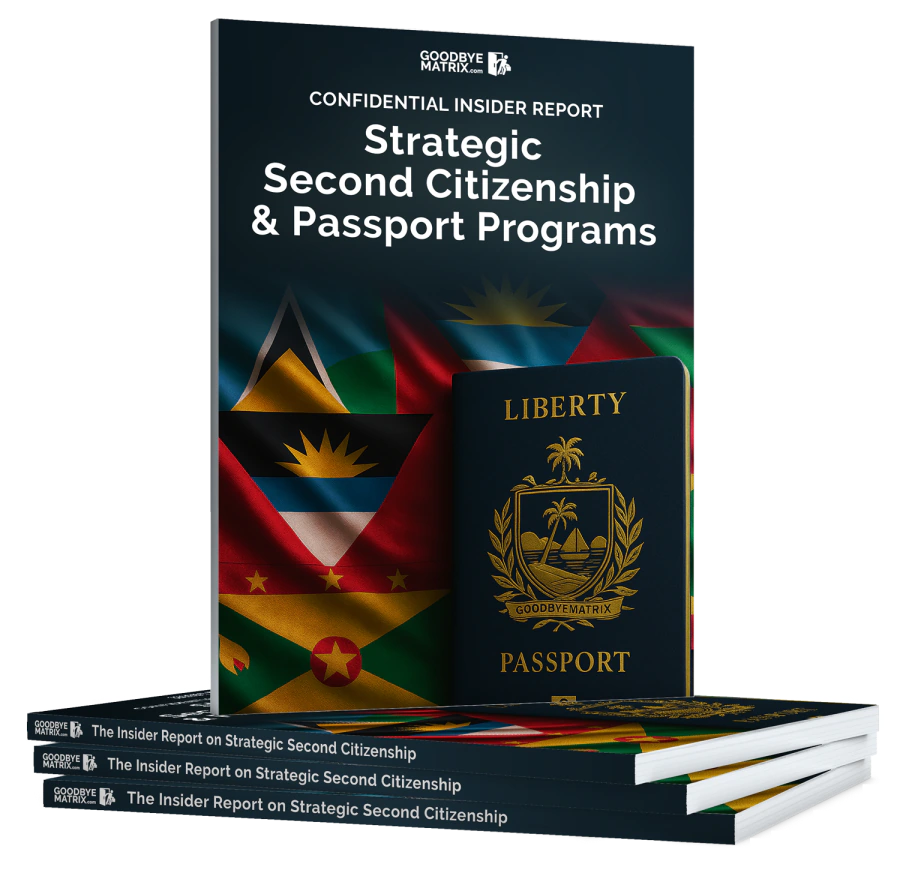
Strategic Second Citizenship & Passport Programs
Access our confidential strategic briefing outlining:
- The 5 most efficient and legally structured paths to a second passport
- Jurisdictions offering accelerated citizenship programs
- Proven investment and ancestry routes for capital and family protection
- How high-net-worth entrepreneurs diversify sovereign risk
This is not about travel perks. It’s about long-term control, asset protection, and jurisdictional leverage.
Wohin dürfen wir Dir den Insider-Report senden?
Du bekommst das Strategiepapier sofort per E-Mail.
Kostenfrei und unverbindlich.