
Gemstones as an Investment
Rubies, sapphires and emeralds in investment quality. Natural, with an international lab certificate. You tell us what you have in mind, our expert puts together stones that fit.
Gemstones as a tangible asset: why the smallest
vault in the world fits in your hand
Gold sits in a vault. Stocks sit in a brokerage account. A gemstone sits in a paper envelope that fits in any pocket.
Coloured gemstones are the oldest store of value humanity knows. For thousands of years they have held wealth in the smallest possible space. Around 1 kilogram of untreated, certified rubies sold at Christie's and Sotheby's between 2007 and 2016 for a combined total of about 374 million USD.
Then there is scarcity. Only about one stone in a thousand still has its natural colour when it leaves the mine. The rest is heated, filled or irradiated. The great classic mines in Burma and Colombia are considered largely exhausted.
And the market is free. No monopoly sets the price of coloured gemstones. Their value barely depends on stock markets, interest rates or banks.
Ruby, sapphire, emerald:
which gemstones work as an investment
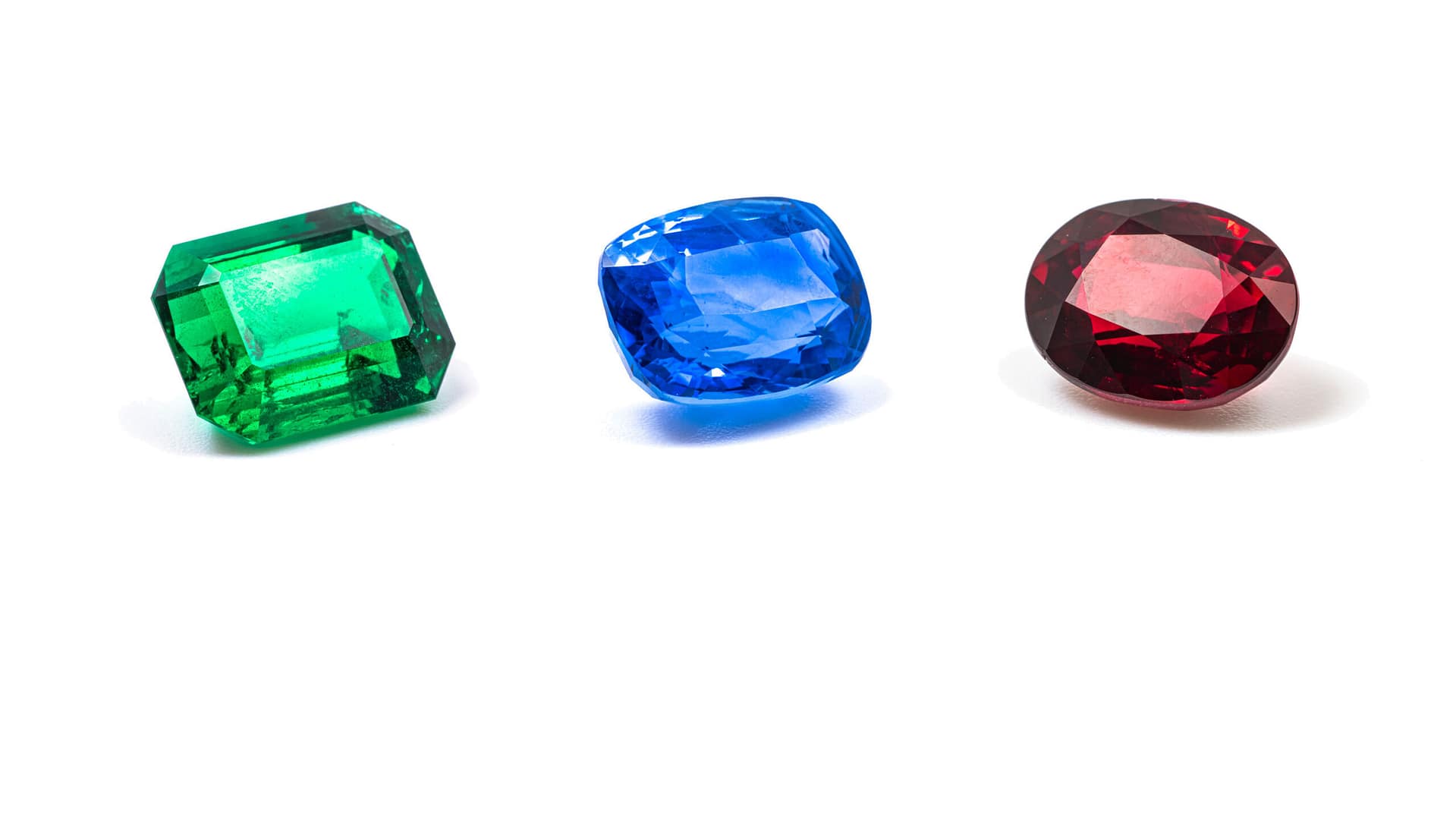
Three stones have carried the market for centuries: ruby, sapphire and emerald. In investment quality they are rare, small and recognised worldwide. Fancy coloured diamonds and rarities come as an addition once the core is in place.
Every stone we recommend carries a certificate from an independent lab such as GRS, Gübelin, SSEF or GIA. A heated or filled stone can be worth a fraction, even if it looks the same.
- Ruby. The rarest of the major gemstones in fine quality, rarer than diamond. Today mostly from Mozambique, the classics from Burma. The price per carat depends on colour, clarity, weight, origin and above all on whether the stone is untreated.
- Sapphire. Royal blue from Sri Lanka, Pakistan or Madagascar, rarely from Burma or Kashmir. The price per carat rises with colour intensity and size. The investment class starts at around 2 carats.
- Emerald. Small, clean stones with little or no oil. Zambia supplies most investment stones today, Colombia remains the classic address.
- Fancy coloured diamonds and rarities. As an addition once your core of ruby, sapphire and emerald is in place.
- Untreated only, certified only. Treated stones are jewellery, not an investment.
Ideal for people who:
- already hold stocks, real estate or precious metals and want to diversify
- want to build wealth over the long term, not speculate
- want to own something small, portable and recognised worldwide
- want to pass wealth on discreetly to the next generation
- want a tangible asset without upkeep: no climate control like art, no maintenance like classic cars
- would like to wear their investment as jewellery from time to time
What an investment stone costs:
ruby, sapphire and emerald from 3,500 EUR
The price comes from colour, clarity, weight, origin and treatment. Our expert shows you real stones with certificate and price, matched to your budget.
Sapphire
Ruby
Rarest stoneEmerald
All prices include the certificate. VAT depends on the place of delivery; with storage in Singapore it does not apply.
Optional: store your gemstones in Singapore,
free of VAT in the freeport
You can keep your stones yourself. Or you store them where wealth has been kept safely for decades: in Singapore.
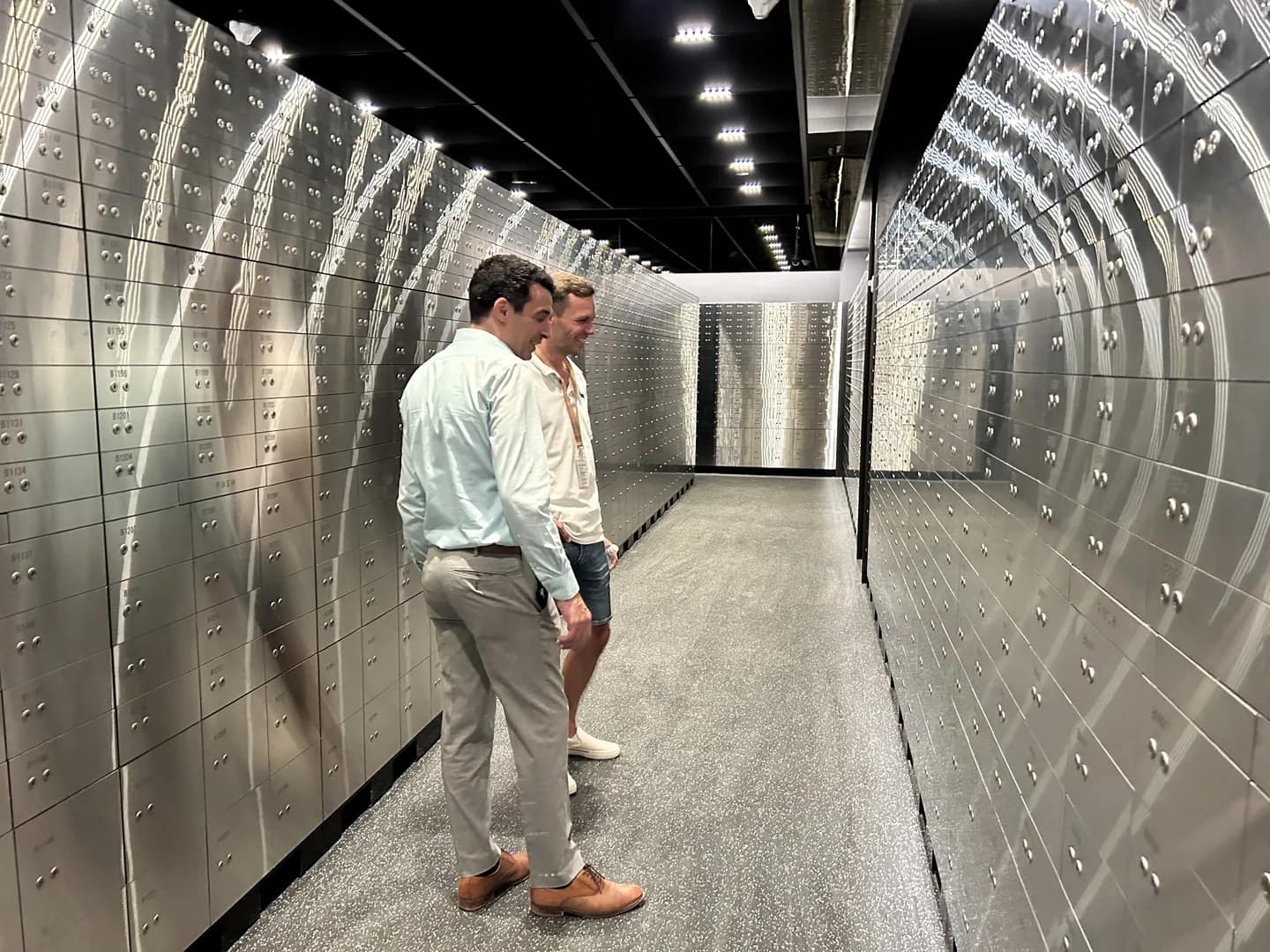
Custody runs through our own company, Patronus Custody Pte. Ltd. Your stones are held in The Reserve, the high-security facility of The Safe House, with which we have an official storage agreement. Every stone is recorded individually, sealed in a security bag with its own serial number and documented with photos and a custody statement. Insured through The Safe House.
In the bonded freeport, no VAT or GST is charged when you buy and while your stones are stored. Only when you import them into your country does that country's import tax apply. 1 % per year for storage and insurance, viewing and collection at any time by appointment.
Tell us what you have in mind. Our expert gets back to you with a selection.
5 short questions plus your contact details. Your request goes straight to our gemstone expert.
Buying gemstones in 5 steps:
from the form to the stone in your hand
Request
You answer 5 questions and leave your contact details.
Selection
Our expert gets in touch and shows you suitable stones with photos, certificates and prices. On request with a 3-day reservation.
Purchase
By bank transfer or card. The stone becomes your property.
Delivery or storage
Insured to your home. Or, on request, to the freeport in Singapore.
Hold and sell
You hold your stones for 3 to 5 years or longer. When you want to sell, we help you find a buyer.
What you get with us:
investment stones the way we buy them ourselves
Untreated only
We recommend natural stones only. Treated stones are jewellery, not an investment.
A lab certificate for every stone
GRS, Gübelin, SSEF or GIA. A dealer certificate does not count.
An expert with decades of experience
Our partner has traded natural coloured gemstones for decades.
A selection built around your goal
Single stone or portfolio, by budget and holding period.
Storage as an option
In Singapore, free of VAT, through our own company.
Help when you sell
When you want to sell, we look for the buyer with you. No guarantee, but a network.
What our clients say.
A strategic family decision: to cyber sovereignty with GoodbyeMatrix
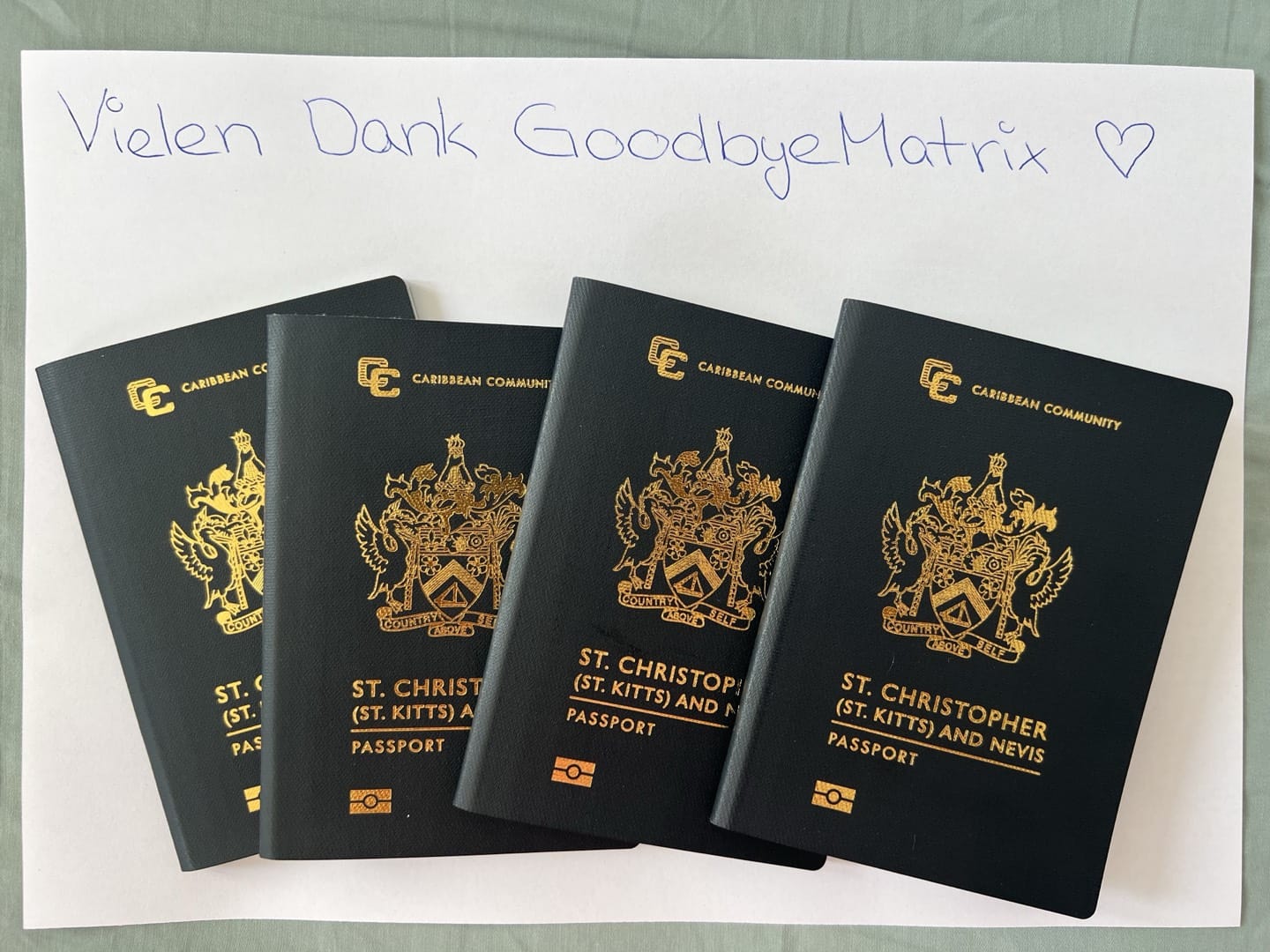
Dear GoodbyeMatrix team,
We would like to personally thank you for your loving support throughout the entire process.
Thank you so much. We are so happy that everything went so smoothly and that we had you by our side.
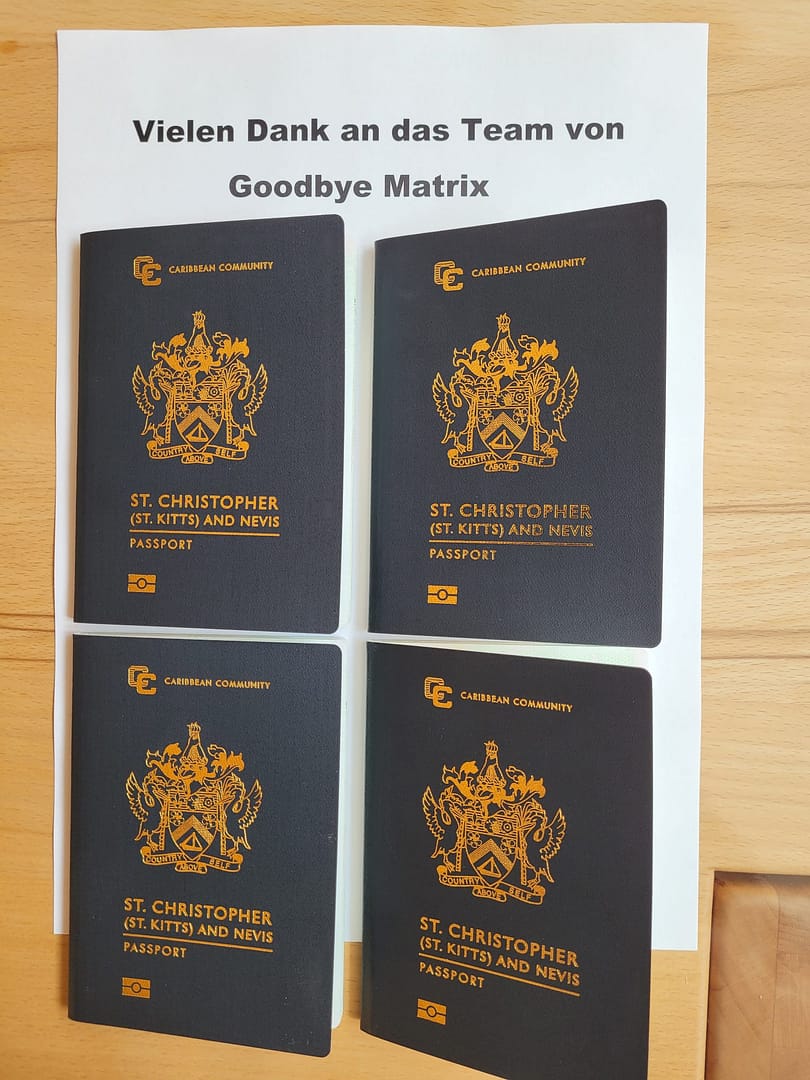
The note in the photo reads: "Many thanks to the Goodbye Matrix team."
Hello Anastasiya,
Thank you - and the entire Goodbye Matrix team - for the great collaboration and professional guidance.
Best regards,
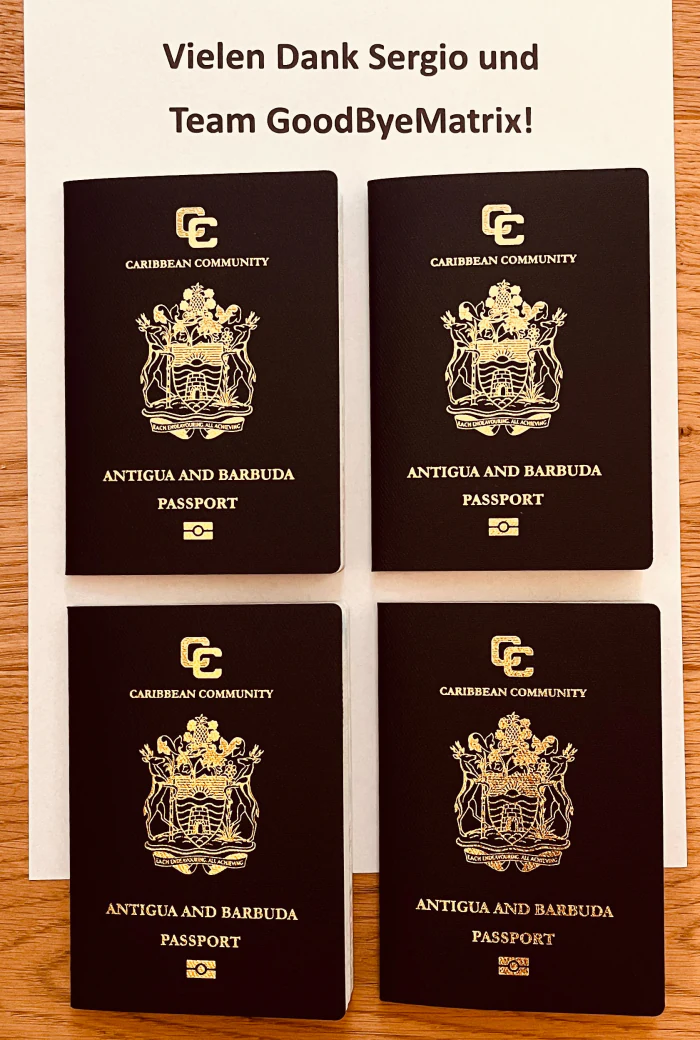
Client thank-you note
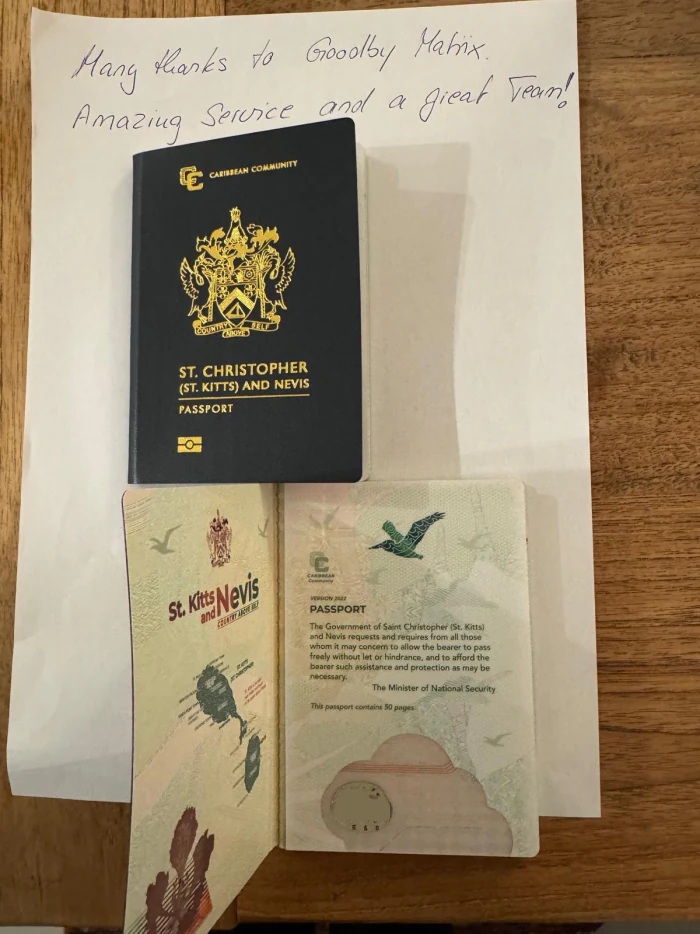
Client thank-you note
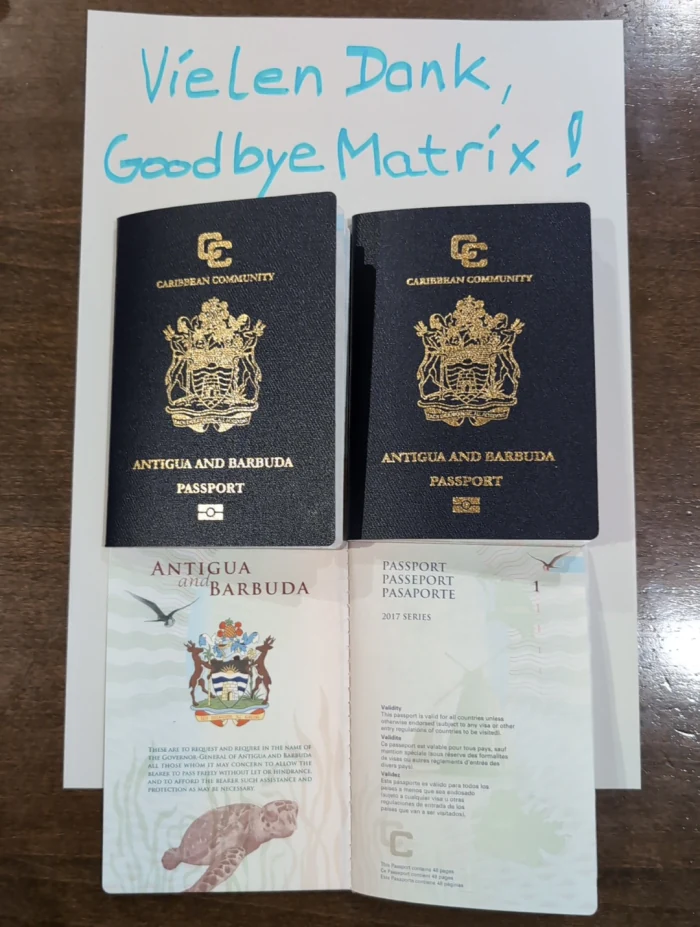
Client thank-you note
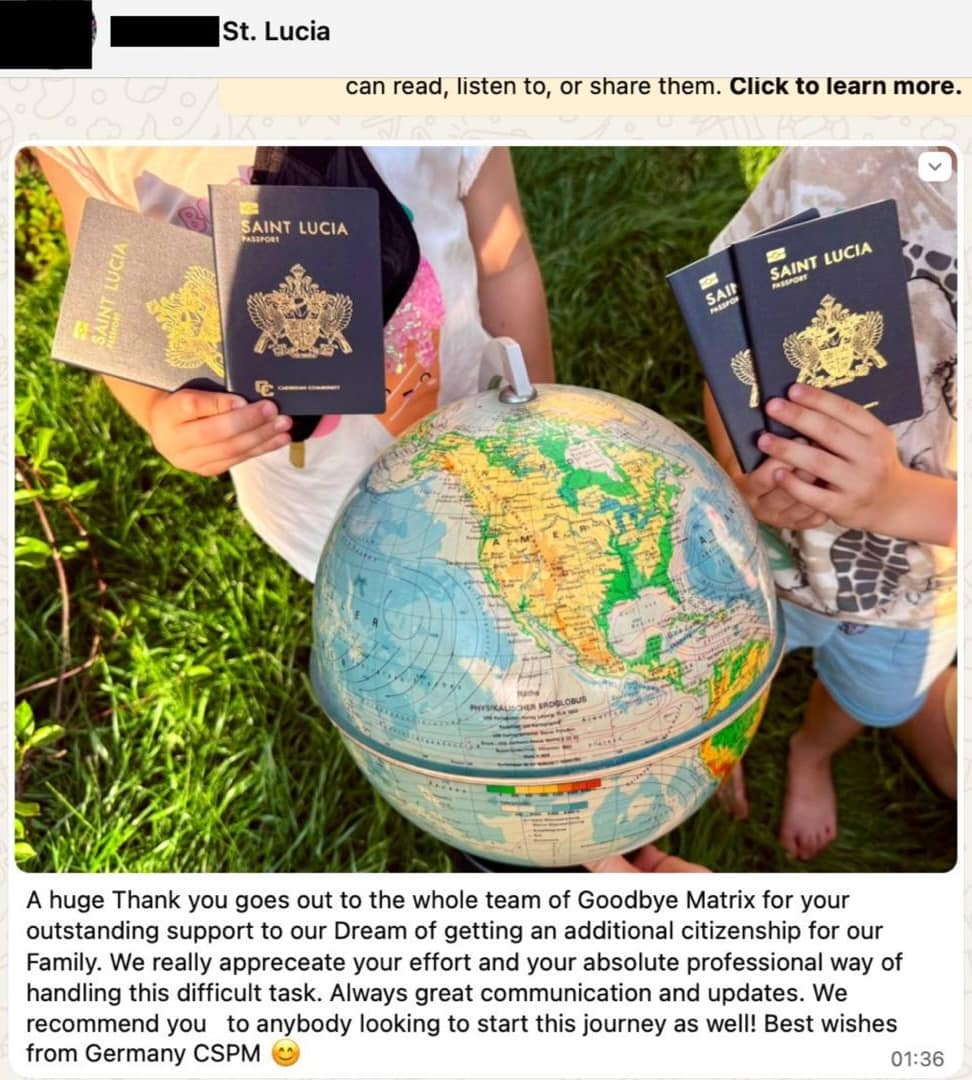
Client thank-you note
Dear GoodbyeMatrix team,
The shipment of the passports from Antigua & Barbuda arrived safely with us this morning.
Thank you very much for your support - you were exceptionally efficient, responsive and professional. Very well done!
Kind regards
“GoodbyeMatrix did not simply help us get a new passport - they opened up a whole new level of sovereignty for us.”
Our new passports from Antigua & Barbuda arrived early this morning - and with them a central milestone on our path to cyber sovereignty.
What sets GoodbyeMatrix apart from other providers is the combination of structure, speed and genuine expertise. From the first call to the final implementation - everything ran smoothly and highly professionally.
Thank you for the support on this path to Flag Theory 3.0. We now feel truly free - global, secure and independent.
“GoodbyeMatrix did not just walk us through the paperwork - they gave us a real sense of control and security.”
Our decision in favor of a second citizenship was driven by the concern of remaining able to act and remaining mobile in an emergency - whether pandemic, war or political unrest. Cyber sovereignty was not a theory for us, it was a necessity.
GoodbyeMatrix - and especially the team around Irish - made this path far easier for us. What at first looked like a document challenge was made solvable in only 3 to 4 weeks through clear structure, weekly checklists and constant support.
We particularly appreciated the transparency and reliability throughout the entire process. Thank you for this sovereign start into our personal Flag Theory 3.0.
“Cyber sovereignty for our family - with GoodbyeMatrix it became reality.”
As parents of four sons, our goal was clear: maximum freedom and protection for our children’s future - especially in view of the looming conscription in Germany. A second citizenship was our strategic plan B.
The path there was complex. Delays caused by German authorities, logistical challenges while we were traveling - it was anything but easy. But this is exactly where GoodbyeMatrix proved to be a real partner: with structured support, updated document checklists and personal guidance, the team led us through every single step.
Without the Sovereign Blueprint and the expertise of GoodbyeMatrix, we would never have been able to take this path so sovereignly and so efficiently. Today we are not only grateful - we are convinced. And we have already recommended GoodbyeMatrix several times.
Case study: the path to a second citizenship - with GoodbyeMatrix
Starting point: Increasing restrictions inside the EU - personally as well as financially - prompted us to look for a strategic way out: a second citizenship as part of our personal Sovereign Blueprint.
Challenge: Entering through the program in Grenada turned out to be bureaucratically demanding. Requirements, documents, processes - the reality was more complex than we had thought. In the end we decided to switch to Dominica.
Solution with GoodbyeMatrix: The team provided us with a structured checklist, accompanied certifications and translations, and answered every question quickly and competently. That support was the decisive difference between frustration and progress for us.
Room for improvement: The change of program was briefly bumpy in terms of communication - but it was quickly offset by clarity and efficiency in everything that followed.
Conclusion: Despite the hurdles: the value for money, the expertise in the field of Citizenship by Investment and the operational support convinced us. Anyone looking for reliable partners on the path to cyber sovereignty will find them at GoodbyeMatrix.
Security in uncertain times - to a second citizenship with GoodbyeMatrix
In a world full of economic uncertainty, geopolitical tension and growing risks, our decision was clear: we needed a plan B - and with it a second citizenship as a strategic building block of our cyber sovereignty.
What we expected: bureaucracy, language barriers and uncertainty. What we got: structure, clarity and an excellently organized team that accompanied us through the entire process.
What makes GoodbyeMatrix special:
Real closeness: The WhatsApp group was not lip service - we got answers quickly and directly, often within a few minutes.
Reliable structure: The English-language application process was never an obstacle thanks to German-language support. Every step was explained understandably.
Maximum efficiency: From collecting the documents to filing the application - everything ran smoothly.
We did not feel like a “customer” - but like partners on the path to Flag Theory 3.0. We would choose GoodbyeMatrix again at any time - and recommend them without reservation.
A strategic family decision: to cyber sovereignty with GoodbyeMatrix
For our family, acquiring a second citizenship was not a “nice to have” - it was a deliberate step toward security, freedom of action and future sovereignty. The reasons were clear: protection from conscription for our son. Freedom to travel for our mother-in-law. And a stable plan B for all of us.
Despite our previous experience with naturalization procedures, one thing quickly became clear: without GoodbyeMatrix the effort would have been incomparably higher.
What made the difference:
WhatsApp support in real time: no long waiting times, no standard answers - instead direct, competent guidance.
Translations & formalities? Taken off our hands completely.
The sovereign process: every step was well thought through, clear, smooth.
One concrete suggestion for improvement from our side: a visualized timeline at the start that makes the waiting phases transparent. Apart from that? Perfect execution and a full recommendation.
“A decision for our children’s future - and the most sovereign plan B one can have”
We deliberately decided on a second citizenship through the Citizenship by Investment program in Antigua & Barbuda - not only as security for our children, but as a strategic step toward cyber sovereignty. With the Sovereign Blueprint, GoodbyeMatrix gave us a clear structure that made the entire process plannable and manageable.
Thanks to the detailed checklists and the strong support from the team, putting the documents together was considerably easier than we had thought. Of course - it was work, but not hurdles that make you fail.
Particularly helpful: the WhatsApp support, which made quick responses possible, and the clear payment processes - transparent, efficient, trustworthy. Even under time pressure we felt safe. The GoodbyeMatrix team gave us the feeling of being in the best hands.
We recommend GoodbyeMatrix without reservation - anyone who wants to realize their personal plan B gets far more than advice here. You get a system, a strong network and the good feeling of being prepared - for whatever may come.
Gemstones as an investment: the key answers.
Are gemstones a good investment?
For part of your wealth: yes. Natural, certified coloured gemstones are scarce, small and recognised worldwide. They work as an addition of 10 to 20 % of your liquid assets, held for 3 to 5 years or longer.
What are the best gemstones to invest in?
Above all untreated rubies, sapphires and emeralds in very good quality from about 1 carat. Rarities such as spinel or fancy coloured diamonds can be added once your core is in place.
What is the price of a ruby per carat?
It depends on colour, clarity, weight, origin and treatment. An untreated ruby can be worth many times a heated stone of the same size. Our expert shows you real stones with certificate and price.
How do I recognise a natural, untreated gemstone?
Only through the certificate of an independent lab such as GRS, Gübelin, SSEF or GIA. It states whether the stone has been heated or otherwise treated. You cannot see this with the naked eye.
How does the purchase work?
You fill in the form, our expert gets back to you with a selection. You pay by bank transfer or card, the stone is delivered insured or, on request, stored in Singapore.
Do I have to store my stones in Singapore?
No. Storage is an option. Many clients keep their stones themselves or wear them as jewellery. Those who store in Singapore save the VAT and have their stones individually sealed and insured.
What does storage in Singapore cost?
1 % per year for storage and insurance, calculated on the higher of the appraisal value or the invoice.
Do I pay VAT when I buy?
With delivery to you, your country's VAT applies. With storage in the bonded freeport in Singapore, no VAT or GST is charged when you buy and while your stones are stored.
Are diamonds a good investment?
White diamonds are considered stable in value but have barely risen in recent years. Their price is strongly influenced by a few large suppliers. For building wealth we recommend coloured gemstones, with diamonds at most as an addition.
How do I sell my gemstones later?
We help you find a buyer. On request we obtain a buyback offer; there is no guarantee.
Your first step to your own investment stone
Tell us what you have in mind. Our expert gets back to you with a selection that fits your goal. Free and without obligation.
Request stones