

How many citizenships can you have? There is no global number: no treaty and no country sets a maximum on how many passports you can hold. The real limit is legal compatibility, whether each nationality law you hold, or want to add, allows that specific combination.
That reframes the question you should actually be asking. Instead of chasing a headline number, you need to know which countries let you keep what you already have, how people actually add a second or third citizenship, and what a citizenship by investment program costs once you add a family.
This article walks through all of it, including a route that gets you a usable travel passport without touching your original nationality at all.
Key Takeaways
Is There a Legal Limit on How Many Citizenships You Can Hold?
No. There is no international law, treaty or organization that caps how many citizenships you can have. The number that matters is not a ceiling, it is a compatibility check between the nationality laws of every country involved.
Dual citizenship simply means you hold the nationality of two countries at the same time. Whether that is legal at all depends entirely on the laws of both states involved, not on some universal limit written down somewhere.
Holding multiple citizenships is common practice for millions of people, but it is only possible where every country involved allows that specific combination.
The same logic scales up to multiple citizenship and dual national citizenship. Each additional passport has to clear the rules of its own issuing country, and it must not conflict with a rule your existing citizenship imposes, such as a renunciation clause.
People have been documented holding 4 or more passports at once, but treat that as an exception, not a rule to plan around.
This is why the useful question is never "what is the maximum." It is "which specific combination of citizenships works for me." That depends on where you were born, whom you married, what your ancestry allows, and which programs you are willing to invest in.
Whether a specific second citizenship is even legal for your current passport is a personal question, not a general one. That is exactly the kind of case-by-case check we walk through in a free consultation call.
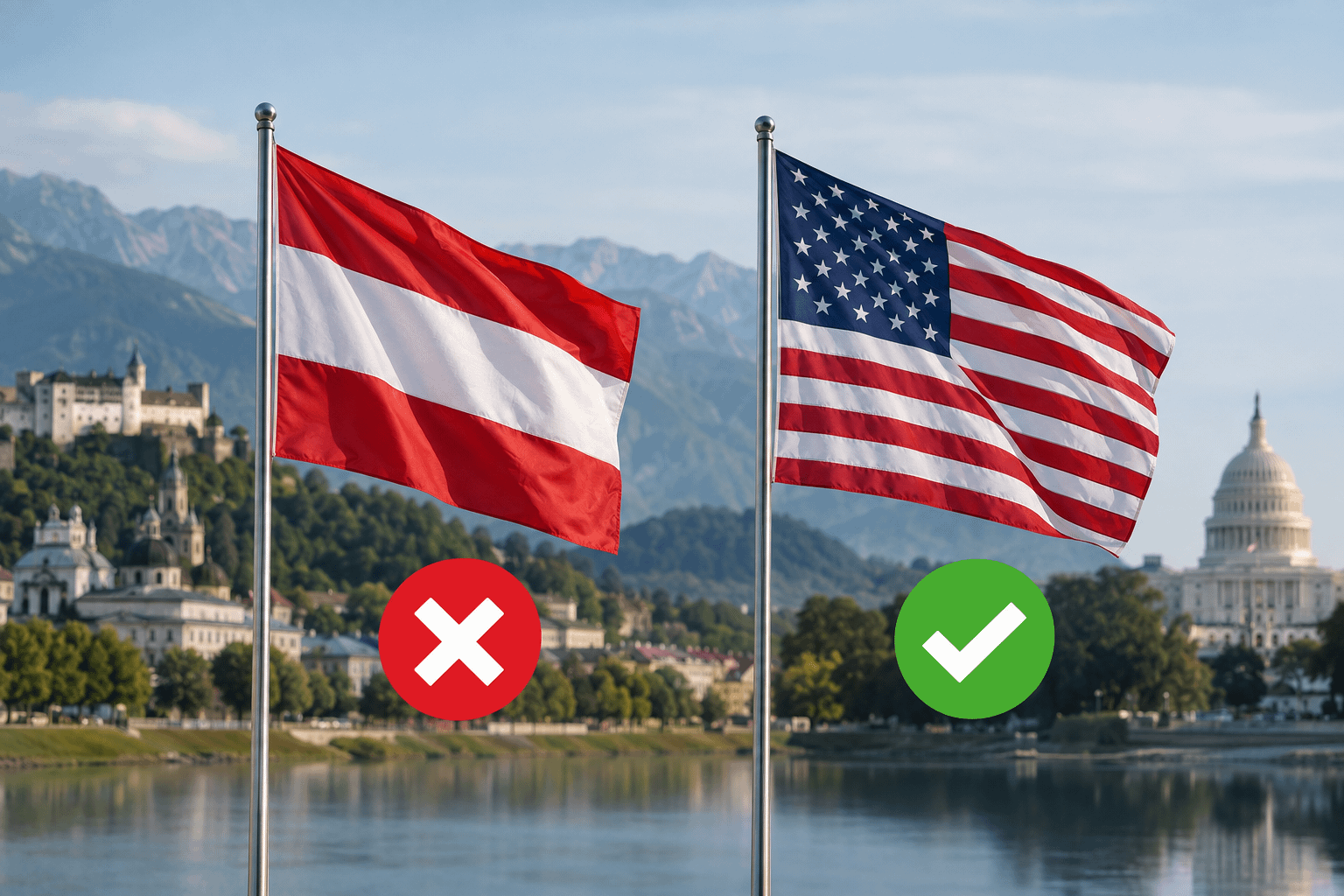
Which Countries Allow Dual or Multiple Citizenship (and Which Don't)
Some countries hand you a second passport and never ask about your first one. Others make you choose. The difference sits in each country's own nationality law, and it usually shows up the moment you naturalize somewhere new.
Naturalization is the most common way people add a citizenship later in life, and it is also where the renunciation trap hides.
Some countries require you to give up your prior nationality as a condition of naturalizing, others do not ask at all. Always check the rule of the country you are naturalizing into, not just the one you already hold.
Dual Citizenship for Americans: What US Citizens Can Hold
If you are American, this part is simple. US law places no restriction on holding citizenship in multiple countries, so dual citizenship for Americans and dual citizenship for US citizens is broadly permitted without giving up your US passport. The same applies if you are British: the UK allows dual citizenship without restriction.
For most readers from the US, UK, Canada, Australia, New Zealand or South Africa, the real work is not proving you are allowed to add a citizenship. It is deciding which second citizenship is actually worth adding, and through which route.
If Your Home Country Restricts Dual Citizenship: The Panama Workaround
Not every reader has it that easy. If your home country's law does not allow dual citizenship, or forces a renunciation you are not willing to make, a second passport in the ordinary sense is off the table. This is where a residency-based route matters more than a citizenship-based one.
Panama's Qualified Investor Visa is the clearest example we work with. Under Executive Decree No. 17 of 8 September 2026, you can qualify by investing at least $300,000 in a new-build property, or $500,000 in a resale property, held for 5 years.
Approval grants permanent residency to you and your family immediately, with only 1 day of physical presence required every 2 years.
Here is the part that makes this a genuine workaround. Under Law 493 of 28 October 2025, holders of this permanent residency, and their recognized family members, can apply for a Panamanian special passport.
It works as a travel document that lets you move like a Panamanian, but it does not make you a Panamanian citizen, and it still shows your current nationality inside the document itself.
Your existing nationality stays exactly as it is, and nothing about it is renounced or put at risk. For someone whose home country bans dual citizenship outright, that is a meaningfully different proposition than a standard citizenship by investment program.
We help with exactly this. Our team on the ground in Panama, including local real estate specialists, can walk you through which property qualifies and how the residency and passport application actually run. You can also Compare Residencies to see how this route stacks up against other options worldwide.
If this is your exact situation, home country restrictions plus a genuine need for a usable second passport, it is worth walking through the specifics in a free consultation call before you commit capital to any property.
How People Actually Acquire a Second, Third or Fourth Citizenship
Most people who end up with more than one citizenship did not shop for it. They were born into it, married into it, descended into it, or naturalized into it over years abroad. Investment is the newest and fastest of the four, which is why it gets its own section next.
Birth is still the most common route: some countries grant citizenship to anyone born on their soil, others grant it through a parent's nationality regardless of birthplace.
Descent works similarly but often reaches back a generation, the way Portugal grants citizenship by descent to grandchildren of Portuguese citizens. That route still requires a birth certificate for the Portuguese relative and, in many cases, basic knowledge of the Portuguese language.
Marriage to a citizen of another country is another common path, though most countries attach a minimum marriage duration or residency period before naturalization becomes possible.
Naturalization after ordinary residency is the slowest route but the most universal one. It is also where the renunciation question resurfaces: some countries require it, some do not, and the answer changes what adding a citizenship actually costs you personally.
Then there is citizenship by investment, where a government grants citizenship for a defined financial contribution instead of years of residency. It is the fastest path on this list, and it is priced very differently depending on which country you choose.
Citizenship by Investment: The Fastest Route to an Additional Passport
Citizenship by investment programs let you buy time. Instead of years of residency, you make a one-time contribution or a qualifying real estate purchase, pass a background check, and receive citizenship in months rather than years.
Most cost comparisons online quote one flat number per country, as if every applicant travels alone. In practice, the typical household that actually applies runs 2.5 to 2.6 people, not a solo investor. That is why the comparison that matters is a single applicant against a family of up to 4.
The table below lists every program we currently track in our own programme order.
Table 1: Citizenship by Investment Minimum Costs, Single Applicant vs. Family of 4, USD
Program | Single Applicant From | Family of 4 From | Real Estate Alternative |
|---|---|---|---|
$90,000 | $95,000 | Not offered | |
$200,000 | $250,000 | $200,000 (5-year hold) | |
$230,000 | $230,000 | $300,000 (5-year hold) | |
$250,000 | $250,000 | $325,000 (7-year hold) | |
$90,000 (promotional) | From $90,000 + $2,000/dependent | Not offered | |
$130,000 | $180,000 | Not offered | |
$240,000 | $240,000 | $300,000 | |
$235,000 | $235,000 | $270,000 (5-year hold) | |
Malta | Closed since 29 April 2025 | Closed since 29 April 2025 | Closed |
Sources: Antigua and Barbuda Citizenship by Investment Unit; Commonwealth of Dominica CBIU; São Tomé and Príncipe CIP; St. Kitts and Nevis CIU; Nauru ECRCP; Vanuatu Citizenship Office; Saint Lucia CIP; Grenada IMA; Court of Justice of the European Union, Case C-181/23. As of: 04/2026
A few things the table does not show on its own are worth knowing.
São Tomé and Príncipe looks cheapest at $90,000, but that headline figure skips a $5,000 submission fee, a translation and notarization fee that rises with family size, and a $750 per-person charge for the certificate of registration, passport and national ID.
Dominica shows the clearest jump between household sizes. A single applicant starts at $200,000 through the Economic Diversification Fund, but adding a spouse or a second dependent pushes the tier to $250,000 for up to 4 applicants. Each additional child then adds $25,000, and each additional adult adds $40,000.
St. Lucia is the only program here that also asks for a net worth affidavit of at least $350,000 on top of the investment.
Vanuatu separately requires proof of net assets of at least $250,000. Nauru's headline $90,000 contribution is a promotional rate, and its official end date is inconsistent across government notices, so confirm current pricing before you commit.
New applications to St. Kitts and Nevis from 14 April 2026 also carry biometric fees starting at $2,500 for the main applicant.
Every program on this list also runs its own due diligence check through the country's financial intelligence or citizenship unit, and a small number of nationalities are excluded from specific programs on security grounds.
That check, not the sticker price, usually determines whether an application succeeds.
You can Compare CBI Programs for current family pricing and due diligence requirements, including the full São Tomé and Dominica program pages.

What Multiple Citizenship Costs You: Tax, Military Service and Renunciation Traps
A passport is not free once you own it, even if you never renounced anything to get it. Two costs come up most often once you actually hold more than one citizenship.
The first is double taxation. If none of your countries have a tax treaty between them, you can end up reporting, and in some cases paying tax on, the same worldwide income twice. This can be triggered by citizenship itself in some countries, and by tax residency in most others, so check the two separately.
The second is that citizenship, unlike a visa, can carry country-specific duties that follow you even if you never live there, from mandatory registration to service obligations tied to nationality rather than residence. Check the specific rules of any country before you add its passport purely for the sake of collecting one.
This is also where a passport portfolio mindset beats counting citizenships one by one. Instead of judging each new passport in isolation, look at what your existing citizenships already give you: visa-free entry, a right to reside somewhere, working bank access, and consular protection if something goes wrong abroad.
A new citizenship is only worth adding if it fills a real gap in that combined picture.
FAQ: Triple Citizenship, Six Passports and Country-Specific Limits
A few follow-up questions come up often once the basics are clear.
Yes, as long as every country involved allows it under its own nationality law. As covered above, there is no global cap on how many citizenships you can have. The only real constraint is whether each passport's issuing country permits that specific combination, and whether any of them requires you to give one up first.
Yes. US law places no limit on how many citizenships an American can hold at the same time, and adding another nationality never requires you to give up your US passport. This makes the United States one of the more flexible countries on this list for anyone building out a passport portfolio.
A residency-based route, such as the Panama Qualified Investor Visa covered above, can get you a genuine travel passport through permanent residency rather than a new citizenship. That means your original nationality is never renounced, declared or put at risk, even though you gain a usable second document.
Yes, this is a real risk if no tax treaty exists between the countries you hold citizenship in, as explained above. Whether it actually applies to your situation depends on both your citizenships and your separate tax residency status, which is why the two should always be checked together, not assumed from one fact alone.
There is no official global registry that tracks this, but cases of individuals holding 4 or more passports at the same time are documented. Treat that as an interesting exception rather than a benchmark you should plan your own citizenship strategy around.
Usually, yes. The programs compared above typically process in months rather than the years that naturalization or residency-based citizenship require. The exact timeline still depends on how long your background and due diligence review takes, not on how quickly you can pay.
Conclusion
How many citizenships you can have was never really the right question. The number that matters is how many of your existing and future nationalities are legally compatible with each other, and what each one actually adds to your mobility, tax position and family's options.
If your home country allows dual citizenship freely, focus on choosing the right second passport, not proving you are allowed one.
If it does not, a residency-based route like Panama's Qualified Investor Visa can get you a usable travel passport without touching your original nationality.
If you are weighing a citizenship by investment program, price it for your actual family size, not the single-applicant headline.
The next step is working out which of these applies to you specifically, before you commit money to any single route.
Building Your Own Passport Portfolio
Whether you are checking if a second citizenship is even legal for you, comparing citizenship by investment programs for your family, or looking at Panama's residency-based passport route, the details depend entirely on your specific nationality, family situation and timeline.
In a free, non-binding consultation call, our team reviews a short questionnaire about your goals in advance, then walks through which route actually fits and what to prioritize first.
If GoodbyeMatrix can help you implement it, we will tell you exactly what that looks like, and if it is not the right fit, we will tell you that too.