
Ecuador Digital Nomad Visa
Living in Ecuador as a remote worker starts with the Digital Nomad Visa, valid for 2 years and open to family members.
- Minimum income
- USD 1,350/Mon.
- Status
- Visa
01 · OVERVIEWWhat makes this program stand out
Living in Ecuador as a remote worker starts with the Digital Nomad Visa, valid for 2 years and open to family members. Ecuador's Digital Nomad Visa is a remote work visa designed for applicants who work remotely while residing in Ecuador. The program permits both the primary applicant and their family members to establish residence in the country. The visa grants an initial validity period of 2 years and can be renewed for additional 2-year periods thereafter.
Qualification is based on demonstrating monthly income of US$1,350. Applicants must be working remotely for employers or clients located outside Ecuador. Local employment in Ecuador is not permitted under this visa category.
The program follows a straightforward structure. You apply with proof of remote work income. You receive a 2-year residence permit. You may renew that permit in 2-year increments as long as you continue to meet the income requirement and maintain your remote work status.
02 · INVESTMENT & COSTSInvestment and costs
What level of income you need to show
The minimum monthly income requirement is US$1,350. This must be demonstrated consistently and documented through official evidence.
Qualifying income sources include remote employment (employment by a foreign company), self-employment (business operations conducted outside Ecuador), and investment returns. The income must originate from sources outside Ecuador.
Documentation must include recent bank statements showing regular deposits, employment contracts or letters from your employer, tax returns from your home country, or proof of business registration and income. Supporting documents should cover a recent period, typically the last 3–6 months, establishing a pattern of consistent monthly deposits that meet or exceed the US$1,350 threshold.
Income must be verifiable through official channels. Informal arrangements, cash transfers without documentation, or unaudited claims do not satisfy the requirement.
Which fees you should expect
The application fee begins at US$900 for a single applicant.
Fees increase based on the number of dependents included in your application.
03 · CLASSIFICATIONFlag Theory 3.0 classification
04 · REQUIREMENTSWhat you need to qualify
Which documents are typically required
Valid passport: current, with at least 6 months validity beyond your intended arrival date. A photocopy of the biographical page is required alongside the original.
Proof of remote work: employment contract or letter from your employer confirming your remote employment status, or business registration documents and tax returns if self-employed. Documentation must confirm you work for entities or clients outside Ecuador.
Health insurance: coverage valid in Ecuador for the duration of your visa. Submit a policy certificate or letter from your insurer showing coverage dates and benefits.
Clean criminal record: police clearance certificate from your country of citizenship and from any country where you have resided for more than 6 consecutive months in the past 5 years. Certificates must be recent (typically issued within 90 days of application) and apostilled.
Evidence of sufficient funds: bank statements from the last 3–6 months demonstrating monthly deposits of at least US$1,350. Submit official statements issued by the bank, showing consistent income patterns that meet the threshold.
Additional supporting documents: completed visa application form, passport-style photographs, and proof of address in Ecuador (rental agreement or property documentation if you have secured accommodation in advance). If including family members, provide marriage certificates, birth certificates for dependent children, and apostilled copies where applicable.
05 · BENEFITSWhy this program may be worth considering
Family members, spouse and dependent children, can be included in the same application. The visa covers all household members simultaneously.
You receive an exemption from import duties and VAT on personal and business items during the first three months of residence. This applies to belongings you bring into Ecuador when you establish your base.
The 2-year validity period provides stable residency status. You can renew the visa in 2-year increments without restarting the qualification process.
These solutions could be relevant for you
Based on your answers we picked a few options that may fit. In the consultation we work out which of them actually makes sense for your situation.
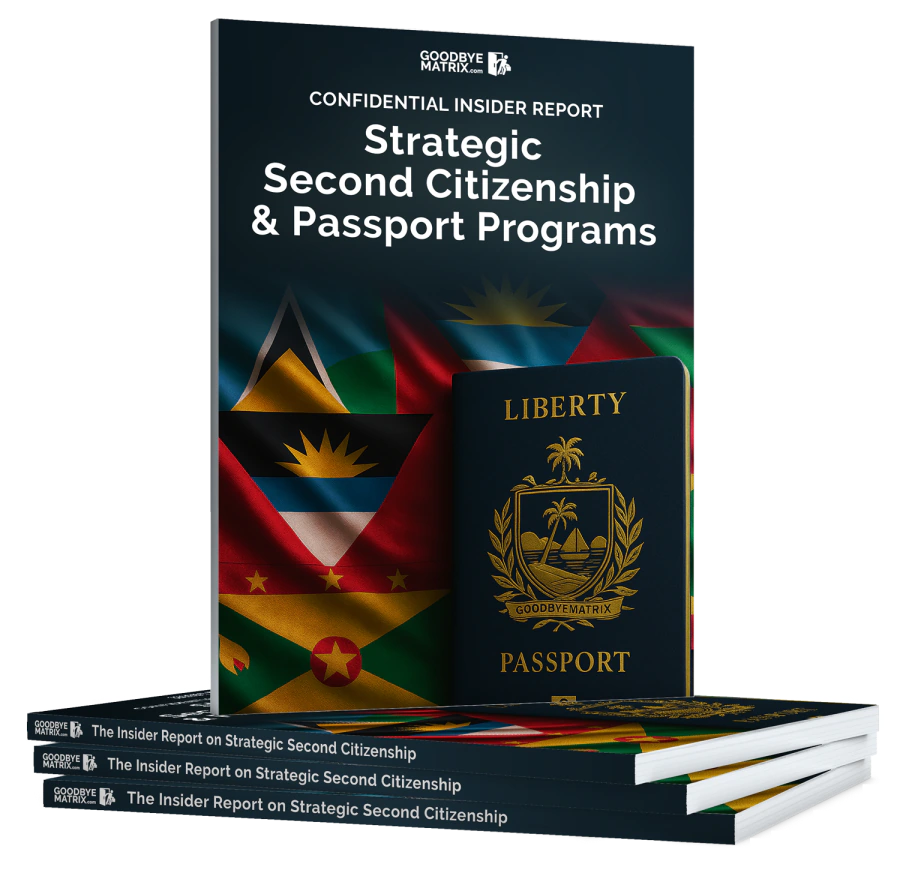
Strategic Second Citizenship & Passport Programs
Access our confidential strategic briefing outlining:
- The 5 most efficient and legally structured paths to a second passport
- Jurisdictions offering accelerated citizenship programs
- Proven investment and ancestry routes for capital and family protection
- How high-net-worth entrepreneurs diversify sovereign risk
This is not about travel perks. It’s about long-term control, asset protection, and jurisdictional leverage.
Wohin dürfen wir Dir den Insider-Report senden?
Du bekommst das Strategiepapier sofort per E-Mail.
Kostenfrei und unverbindlich.