
Singapore ONE Pass
For top earners and exceptional professionals, the ONE Pass is the Singapore visa with a 5-year term.
- Path to citizenship
- 2 years PR
- Visa-free
- 193 countries
- with the passport
- Presence
- 183 days/year
- Dual citizenship
- No
- Status
- Permanent residence
- 6 months
01 · OVERVIEWWhat makes this program stand out
For top earners and exceptional professionals, the ONE Pass is the Singapore visa with a 5-year term. The Singapore ONE Pass (Overseas Networks & Expertise Pass) is a five-year residence permit designed for high-earning professionals and individuals with exceptional achievements. It operates as an independent means visa, offering holders the freedom to work for multiple employers, establish their own businesses, or pursue various professional activities without the constraints of traditional employment-based permits. The program targets two distinct qualification paths: professionals with a minimum monthly income of S$30,000 over the 12 consecutive months preceding application, or individuals with exceptional achievements in arts and culture, sports, science and technology, or academia and research.
The ONE Pass decouples residency status from a single employer relationship. Holders gain operational flexibility to structure their professional lives across multiple income sources or ventures. The permit is valid for five years. Renewal requires demonstrating an average fixed monthly salary of at least S$30,000 over the previous five years while resident in Singapore.
Holders must maintain 183 days of physical presence per year to satisfy residency requirements. After working locally for at least six months, ONE Pass holders become eligible to apply for permanent residency, though waiting one to two years is generally recommended to demonstrate stable income and economic contribution. Once permanent residency is granted, holders must maintain that status for two years before becoming eligible to apply for citizenship. Singapore does not recognize dual nationality; citizenship applicants must renounce their original citizenship upon naturalization. A Singapore passport provides visa-free access to 193 countries.
02 · INVESTMENT & COSTSInvestment and costs
What level of income you need to show
The employment-based qualification requires a fixed monthly salary of at least S$30,000 for 12 consecutive months immediately preceding your application. This income must come from active employment, not passive sources or irregular earnings.
If you are employed by an overseas company at the time of application, that company must meet size thresholds: market capitalization of at least US$500 million or annual revenue of at least US$200 million. The overseas employment itself must span at least 12 consecutive months before you apply.
The achievement-based route eliminates income requirements entirely. You may qualify without meeting the S$30,000 threshold if you demonstrate outstanding achievements in one of four fields: sports, arts and culture, academia and research, or science and technology. Applications through this route are evaluated holistically by relevant government agencies, no fixed income documentation is required.
Renewal after five years requires either: an average fixed monthly salary of at least S$30,000 over the entire five-year holding period in Singapore, or operating a Singapore company that employs at least five local workers. The renewal income test measures consistency over the full five years, not a single month.
Fixed monthly salary is the qualifying income type for employment-based applicants. Bonuses, variable compensation, investment returns, and other irregular income do not count toward the S$30,000 threshold unless they are explicitly documented as part of a fixed compensation structure in your employment contract.
You must provide payroll records, employment contracts, and bank statements demonstrating 12 months of consecutive salary deposits to satisfy income verification. For overseas employment, additional documentation of your employer's financial standing (market capitalization or annual revenue proof) is required at application.
03 · CLASSIFICATIONFlag Theory 3.0 classification
04 · REQUIREMENTSWhat you need to qualify
Singapore offers two qualification routes. The employment-based route requires applicants to demonstrate a fixed monthly salary of at least S$30,000 for 12 consecutive months preceding the application. Applicants employed overseas must have worked for an established company for 12 consecutive months before application. Established overseas companies must meet one of two thresholds: market capitalization of at least US$500 million, or annual revenue of at least US$200 million.
The achievement-based route removes the salary requirement entirely. Applicants qualify through outstanding achievements in four recognized domains: sports, arts and culture, academia and research, or science and technology. Applications are reviewed holistically by relevant government agencies. This route provides access for high-profile individuals whose contributions cannot be measured purely through salary thresholds.
After five years, holders must satisfy renewal requirements that differ from initial qualification. Renewal demands one of two conditions: an average fixed monthly salary of at least S$30,000 over the previous five years in Singapore, or operation of a Singapore company employing at least five local workers. This structure permits holders to transition from salaried employment into entrepreneurship while maintaining status.
All holders must maintain 183 days of physical presence per year to satisfy residency obligations. This threshold applies throughout the permit's validity period and must be documented for renewal purposes.
05 · BENEFITSWhy this program may be worth considering
Singapore combines tax efficiency with political and physical security at levels matched by few jurisdictions globally. The city-state's low tax regime features no capital gains tax, no inheritance tax, and personal income tax rates capped at 22% on income above S$320,000. Corporate tax sits at a flat 17%, with substantial incentives available for specific business activities. Territorial taxation means foreign-sourced income remitted to Singapore generally remains untaxed.
The jurisdiction ranks among the world's safest. Property rights operate under transparent common law. Contract enforcement is predictable. The World Bank consistently ranks Singapore first globally for ease of doing business. Political stability remains high. Infrastructure quality, public transportation, and healthcare systems function at world-class standards.
Climate conditions support year-round operation without seasonal disruption. Average temperatures range between 25-31°C throughout the year. Humidity remains high but infrastructure compensates with universal climate control in commercial and residential buildings.
English functions as an official working language across government, business, and education systems. No language barrier exists for native English speakers. The education system produces globally competitive results. International schools operate throughout the city, providing continuity for families relocating with children.
Singapore functions as a regional hub for Southeast Asia. Direct flight access connects to every major Asian capital within 1-7 hours. The city serves as operational headquarters for regional expansion into ASEAN markets worth 680 million people. Banking infrastructure supports multi-currency operations. Free trade agreements provide preferential access to China, India, Japan, and Australia simultaneously.
Processing timelines compress substantially compared to traditional immigration pathways. Initial application decisions typically arrive within 8-12 weeks. Permanent residency applications submitted after six months of local work receive decisions within 4-6 months on average. This structure permits qualified professionals to transition from application to permanent residency within 18-24 months total, significantly faster than most developed nations.
The Singapore passport provides visa-free access to 193 countries, ranking consistently among the world's three strongest travel documents. This includes unrestricted access across the EU, UK, USA, Canada, Australia, and most of Asia.
06 · PATH TO CITIZENSHIPHow the path to citizenship works
Permanent residency becomes accessible after six months of local work on the Singapore ONE Pass. Applications are assessed case-by-case by the Immigration and Checkpoints Authority based on work history, salary level, economic contributions, achievements, societal engagement, and long-term commitment to Singapore. Waiting one to two years is generally recommended to demonstrate stable income and economic contribution.
Citizenship eligibility begins after holding permanent residency for at least two years. Applicants must demonstrate integration into Singapore society and meet naturalization requirements. This includes passing citizenship assessments. Singapore does not recognize dual nationality. Applicants must renounce their original citizenship upon becoming Singapore citizens.
07 · LEGAL BASISWho oversees the program and what it is based on
The Ministry of Manpower (MOM) administers the Singapore ONE Pass program.
The program operates under two primary legal instruments: the Immigration Act (Chapter 133) and the Employment of Foreign Manpower Act (Chapter 91A).
Applications are assessed and approved by MOM based on eligibility criteria including income thresholds and professional achievement levels. Subsequent applications for permanent residency and citizenship are handled by the Immigration and Checkpoints Authority (ICA), which evaluates candidates on a case-by-case basis using criteria such as work history, salary stability, economic contribution, and demonstrated societal integration.
These solutions could be relevant for you
Based on your answers we picked a few options that may fit. In the consultation we work out which of them actually makes sense for your situation.
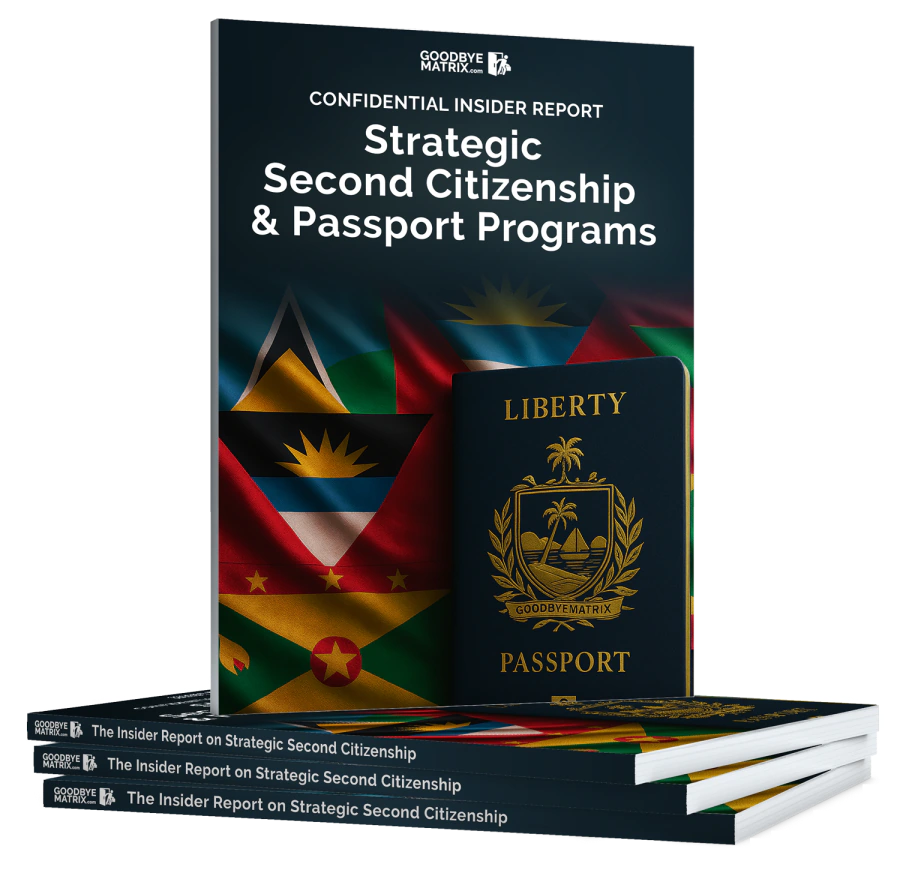
Strategic Second Citizenship & Passport Programs
Access our confidential strategic briefing outlining:
- The 5 most efficient and legally structured paths to a second passport
- Jurisdictions offering accelerated citizenship programs
- Proven investment and ancestry routes for capital and family protection
- How high-net-worth entrepreneurs diversify sovereign risk
This is not about travel perks. It’s about long-term control, asset protection, and jurisdictional leverage.
Wohin dürfen wir Dir den Insider-Report senden?
Du bekommst das Strategiepapier sofort per E-Mail.
Kostenfrei und unverbindlich.